Dodgy business at Amazon, part three hundred and two

And this would be why Amazon tends to make me uncomfortable:

Amazon removes all Macmillan books from its store listings, in retaliation for pricing disputes. (via the New York Times)

Cory Doctorow provides useful perspective on the matter here, with a general consideration of the problems of market concentration and Amazon’s DRM policy.

(You may remember the awkward brouhaha dubbed “Amazonfail” last year, during which over 50,000 books having anything to do with sexuality were pulled from Amazon’s sales charts – most controversially, books, including classics, with LGBT themes, which caused much slinging about of heated claims of censorship. Amazon, after a great deal of public miscommunication and apparent internal confusion, eventually issued a statement attributing the problem to “a glitch.” I wish I could find an article with better coverage of the thing than CNN’s, but right now I’m not up to further newsdigging.)

– E

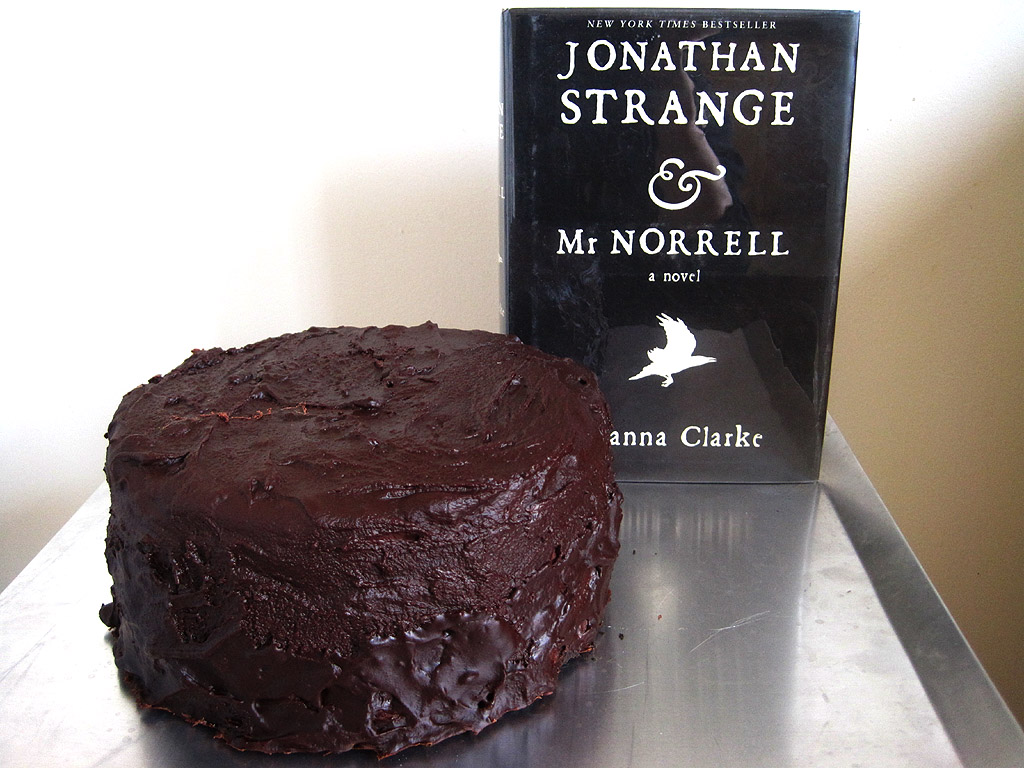
Booklish #2: Jonathan Strange and Mr Norrell Black Forest Raven Cake

booklish-jonathan-strange-and-mr-norrell-susanna-clarke-whole-cake

View Recipe: Jonathan Strange and Mr. Norrell Black Forest Raven Cake

Today we celebrate Susanna Clarke’s Jonathan Strange and Mr. Norrell (2004), a fantastical alternate history of gentlemen and magic, and an utmost obsession of Kakaner and Emera. We decided to honor this richly wrought tale of fairies, otherworlds, and scholarly magic with an appropriately dense and complex confection filled with all sorts of surprises.

Continue reading Booklish #2: Jonathan Strange and Mr Norrell Black Forest Raven Cake

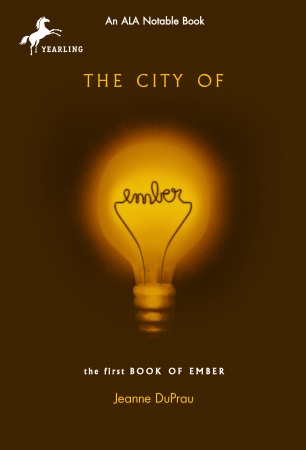
The City of Ember, by Jeanne DuPrau (2003) E

Date read: 1.26.10
Book from: Borrowed from Kakaner
Reviewer: Emera

Jeanne DuPrau - The City of Ember

“The city of Ember was made for us long ago by the Builders. It is the only light in the dark world. Beyond Ember, the darkness goes on forever in all directions.”

At the age of twelve, every child in Ember is assigned a job. Curious, bright-spirited Lina Mayfleet longs to be a messenger, but is instead assigned to dreary, dirty work in the underground Pipeworks. Doon Harrow, her classmate, is convinced that the sporadic blackouts of the great lamps of Ember – the only lights in a world of immeasurable darkness – forebode worse troubles for the city. He longs to investigate the enormous generator in the Pipeworks that provides the city with all of its power, so when he receives the job of messenger, he and Lina eagerly swap their assignments. As the blackouts increase in frequency and fear spreads among Ember’s citizens, Lina soon comes to share Doon’s suspicions that Ember is a dying city. Together the two embark on a search to uncover Ember’s origins, and to find a way to lead their people to the bright city that Lina is sure exists somewhere in the Unknown Regions beyond Ember.

I didn’t enjoy The City of Ember nearly as much as I thought I would, for all that it’s a rather endearing book. The characters and setting are warmly evoked, with detailed and frequently beautiful descriptions, and of course the concept is fantastic to begin with – Ember is one of those fictional realms you wish you could visit, and more often than not end up carrying around with you in your head after reading. (I imagined it looking like a less anarchic version of the city in the film La Cité des Enfants Perdus/The City of Lost Children, and would pay a large amount of imaginary money to run along its streets and peer into its shops.)

Continue reading The City of Ember, by Jeanne DuPrau (2003) E

BBCF: The God Engines

By request of Kakaner, the star of this week’s Bad Book Covers Friday (an hour and a bit late by my timezone; whoops) is the unreleased* version of the cover of John Scalzi‘s The God Engines, released by Subterranean Press:

John Scalzi - The God Engines
Missing the baby-fresh complexion, the rosy glow that once graced your youth? Just try stripping down to a loincloth, wrapping yourself in chains, and screaming as block letters loom over your forehead and you, too, can feel fresh and perky once more. Your pores won’t just open – they’ll scream for mercy. Side effects may include washboard abs, inhuman rage, and neckbeard.

From what I’ve gathered of the plot, this cover is actually a fairly accurate representation of what occurs in the book (I won’t go so far as to say “what the book is about”). So yes, one part of me rejoices in those cover artists who actually produce something remotely relevant to the contents of the books they illustrate. The rest of me is wishing that this one didn’t make something that looks like the dreams of a ninth-grade boy who just overdosed on Dragon Ball Z and Pepto-Bismol.

The best/only good part of this cover disaster is that Subterranean Press later released a very, very delicately worded admission that the cover was Not What They Were Expecting, and shortly thereafter presented a different cover illustration for the actual printing:

“Our previous cover to John Scalzi’s dark fantasy novella, The God Engines, didn’t quite convey the spirit of the tale, so we’ve had it redone by SubPress favorite Vincent Chong.”

“Didn’t quite convey the spirit of the tale,” you say… Ah well, blessings upon independent presses that a. have the taste and b. actually take the time to effect quality control. That is dedication.

Also, is it just me or has the running theme for all the BBCF’s so far been “stuff that’s screaming and/or thrusting fists in the air”?

* corrected from “first-edition;” thank you to the scarily fast John Scalzi for pointing this out.

Go to:
Bad Book Covers Friday Archive

Roosterguarded

is the euphemism that Kakaner and another friend helped me come up with for how I felt after I walked a fair distance under rather chilly conditions, only to find that the target of my latest and much-anticipated awesome-bookstore visit, Argosy Books (116 East 59th Street, New York, New York) was CLOSED.

Approaching the target (green banner spotted ahead):

And it is…

…CLOSED WHYYYYY. On top of having beautifully lit and presented displays out for me to stare at longingly through the bars, they even had a “New Year’s Sale!” prominently advertised. Well I can’t abuse my savings account on behalf of your sale if you’re CLOSED, can I?

So my visit to Argosy had to be put off to another time, but I did get to see some fun bookish things when my brother and I ducked into the New York Public Library to poke around.

Continue reading Roosterguarded

Self-portrait, off the bookshelves

Andy passed on a nifty meme to Kakaner and me – pick 10 books off your bookshelves, with your eyes closed, then use them to tell a bit about yourself. Here goes!

  1. Night Shadows: Twenthieth-Century Stories of the Uncanny, ed. Joan Kessler

The editor is my mother’s friend, which tells you that a. my mom has some pretty cool friends, and that b. I have a lot in common with this particular friend, because holy crap do I love stories of the uncanny. Aesthetically and literarily, I’m about 30% shameless Goth-in-disguise. Unfortunately, I have yet to read this, and the other volume that I was gifted by this friend – a collection of her translations of French ghost stories.

  1. The Lady and the Unicorn, by Tracy Chevalier

Love historical fiction, love the Unicorn Tapestries, like Tracy Chevalier quite a bit, though I only got into her books via the Girl with a Pearl Earring bandwagon. I also own this in French, but have only read about two chapters of that version.

  1. The Fairy-Faith in Celtic Countries, W. Y. Evans-Wentz

One of my friends got me this when she spent a semester in Glasgow. Ummm yes, Celtic stuff, another of my longstanding obsessions. And fairies. Haven’t read this yet.

  1. Birth of the Firebringer, by Meredith Ann Pierce

Okay… my thing about Meredith Ann Pierce is a little scary, and will probably have to be gone into at greater length at another time. Suffice it to say that I can’t imagine who I would have been had I never read any of her books. I picked the original hardcover, but I also own the paperback reprint. Also, more unicorns. Not gonna lie, I like unicorns. What is wrong with me?

  1. The Illustrated Man, by Ray Bradbury

In my eyes, Ray Bradbury can do no wrong. The copy that I own of this is a mass-market paperback in terrifyingly bad condition, since it used to belong to my father and thus has been through many reads and moves.

  1. The Dark is Rising, by Susan Cooper

And this would be one of the two books that started my obsession with Celtic mythology, and another core book in my “canon.”

  1. 100 Vicious Little Vampire Stories, ed. Robert Weinberg

Have I ever mentioned that I really, really like vampire fiction? Reviewed here.

  1. Mostly Harmless, by Douglas Adams

…I’m a predictable nerd? Actually, out of all of the Hitchhiker’s books, this is the only one I disliked, though I can’t really blame Adams for the “I’m throwing my hands up and getting rid of the lot of you” approach to ending the series.

  1. Selected Poems of Byron, Keats, and Shelley

Again, Romantigoth. I do read modern and contemporary poetry too, though. I actually haven’t touched this ever since I got it, but it’s a very pretty green leatherbound edition from… 1967. Crummy paper, though.

  1. The Gormenghast Trilogy, by Mervyn Peake

More Romantigoth, more fantasy. Haven’t read it, beyond 15 pages a number of years back. Aiiieee. I’ve meant to ever since I saw the Masterpiece Theatre edition and began cultivating a crush on Jonathan Rhys Meyers, but… you know. Things happen. Books languish.

– E
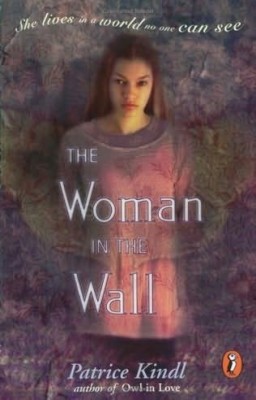
The Woman in the Wall, by Patrice Kindl (1998) E

Date read: 3.22.06
Book from: Borrowed from Kakaner
Reviewer: Emera

book-kindl-woman

Rendered nearly invisible by her painful shyness, Anna is the middle girl of three sisters living with their mother in a rambling Victorian home. At seven years old, terrified by the impending threat of school, she retreats into passageways and secret rooms of her own construction, and lives within the walls of her home for the next seven and a half years. Anna is content to hide away as a sort of household ghost, nearly forgotten by even her family, until her own growth as a woman renders her “invisibility” no longer possible. A stray love note pushed through the walls of her refuge appeals to her developing emotions, and the time approaches for Anna to once more venture into the outside world.

I randomly spotted The Woman in the Wall on Kakaner’s bookshelf at some point around when we first began exchanging reading material on a regular basis, and the premise deeply appealed to me since I’m a. sorta shy and b. obsessed with secret nooks and passageways, to the point that a home-within-a-home sounds right up my alley. Even outside of my particular quirks, the concept is an emotionally powerful and imaginatively appealing one.

Unfortunately, Kindl’s writing isn’t up to the task. Although the book aims for a wistful, playful mix of Gothic fairy tale and magical realism, it increasingly dissolves into a weepy, unconvincing pastiche, with the narration lurching between “artsy,” “quirky” whimsy and banal adolescent histrionics. Too much pretension (or, more charitably, ambition), not enough substance. Though Anna’s story could have been a moving modern fairy tale about escapism and self-isolation, The Woman in the Wall more often seems clumsy, superficial, and implausible.

Go to:
Patrice Kindl

“A Buyer’s Guide to Maps of Antarctica,” by Catherynne M. Valente (2008) E

Date read: 8?.09
Read from: Clarkesworld #20
Reviewer: Emera

I had previously mentioned “A Buyer’s Guide to Maps of Antarctica” as being one of my favorite short stories read in 2009, yet had never gotten around to posting a review.

I don’t want to spoil a single bit of it, so I’ll just say that it’s like Jonathan Strange and Mr. Norrell except with Antarctican cartography (yes, duh – seriously, I refuse to reveal any of it, please just go read it if you’ve got the chance), and that it’s funny, delightfully imagined, and ravishingly beautiful. I rather wish it had won the 2009 World Fantasy Award that it was nominated for, but clearly that’s not up to me. So instead I’ll just flail about it here.

Go to:
Catherynne M. Valente
“Urchins, While Swimming,” by Catherynne M. Valente (2006) [E]

“Lover and long-legged girl”

Maxine Kumin reads “Looking Back in My Eighty-first Year” (via Poems Out Loud)

I got to hear Maxine Kumin read this past autumn, and enjoyed the clarity and directness of her language – qualities particularly appreciated during a reading, I’m not gonna lie.

I’ve been zigzagging through her Selected Poems, 1960-1990 since then, and have enjoyed just about every one of her gardening poems and horse poems in particular, though her intensely meditative voice makes her personal poems generally excellent. Still underwhelmed on the political poems front.

To get back to the link at hand, “Looking Back in My Eighty-first Year” moves me to the point of being inarticulate about it, so I’m just posting the link and leaving it at that. Hope some of you will enjoy.

– E

“Half Flight,” by Shweta Narayan (2008) E

Date read: 1.7.09
Read from: The Journal of Mythic Arts
Reviewer: Emera

More fairy tales, finally! I’m backed up on reviews to the point of – well, I’m always backed up on reviews, but I’m feeling particularly guilty about not getting to reviews of all the nifty short stories, fairy-tale-inspired and otherwise, that I’ve been reading this winter.

Shweta Narayan’s “Half Flight” is an odd little retelling of one of my absolute favorite fairy tales, also featuring a brief cameo by a visitor from one of my absolute favorite folk tales. (Glancing at her website bio, we share an interest in liminal characters – “shapeshifters and halfbreeds,” as she puts it – so there you go.)  I hate to describe something as “odd” because it seems like a cop-out, but “Half Flight” is, somehow and pleasingly, a little off-kilter. I think it might in fact come from that little folkloric intrusion, although again, intrusion is the wrong word. The meeting of the two strands of story feels organic and intuitive, and enrichens both of the characters in question, as well as the particular psychological narrative that Narayan pursues. When I reached that bit, I almost skimmed over it, did a double-take, read it again more closely, and then thought, “of course.”

Although her imagery could use sharpening and intensifying, since the language occasionally falls flat, the tale as a whole succeeds in being thoughtful and tender without excessive sentimentality. The last line did raise my hackles a little; last-line clunkers are terribly hard to avoid when you’re going for “tender.”  Regardless, Narayan is successful in conveying an unsettling desperation and psychological fragility under the measured, dispassionate narration, and I was deeply satisfied by the new sense that her telling brings to the archetypes and narratives that it plays with.

Go to:
Shweta Narayan
“An Old-Fashioned Unicorn’s Guide to Courtship,” by Sarah Rees Brennan (2008) [E]
Winter is for fairy tales