The Lies of Locke Lamora, by Scott Lynch (2006) E

Reviewer: Emera
Date read: 7.14.2016
Book from: Personal collection

The Lies of Locke Lamora features long cons, crime-boss uprisings, and bloody revenge plots amid the cluttered criminal underworld of a bustling, sweltering, alchemy-infused alternative medieval Venice. Our heroes: the Gentleman Bastards, a tiny brotherhood of con artists, led by the unparalleled liar Locke Lamora.

One of my good reading buddies went crazy for this novel shortly after it came out, and I had always wanted to read it since, especially because the title was so mischievous, lyrical, and evocative. The fact that it continually resurfaces as a fan favorite 10 years on also piqued my interest. (e.g., it’s still on the bestseller list at my local sff bookstore, Pandemonium.)

Based on the hoopla, I’d been expecting something Dorothy Sayers-esque – exceptionally witty and elegant – but unfortunately found this, prose-wise, to be a solid B+ at best. Lynch’s writing is markedly juvenile: he overuses italics and parentheticals, and treats profanity in large quantities as funny per se. Characters emote by gritting their teeth, gulping, and squeaking. I would describe the humor as geekily goofy, rather than witty. His descriptions are colorful and involving, but not sharply observed. He does a good job of conveying personality more through dialogue than exposition, but again, isn’t quite sharp enough to fully resolve characters purely through these means. I wouldn’t say the characters feel hollow, as they often do in mediocre fantasy – symbols of people rather than people – but there’s a general feeling of a slightly unfocused photograph about the whole thing. The villains in particular are dreadfully boilerplate.

That said, I stuck it out, and had a lot of fun with it. This book has vim – it has bounce and fun and grit and texture – qualities that are helped along by Lynch’s obvious enjoyment at sharing his created city, and a greater part of lightheartedness than grimness. Continue reading The Lies of Locke Lamora, by Scott Lynch (2006) E
Wizard of the Grove, by Tanya Huff (1988/9) E

Reviewer: Emera
Date read: 9.3.2016; 9.17.2016
Book from: Personal collection

book-wizardofthegrove

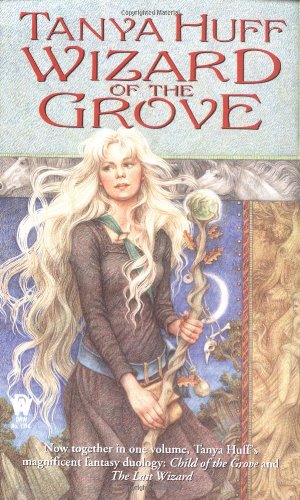
Wizard of the Grove is an omnibus reedition of Tanya Huff’s 1988/1989 romantic high fantasy duology, Child of the Grove and The Last Wizard. I picked this up back in high school based on the lovely cover art (which I note has been redone recently to be trendily dark, teal, and high-contrast), subsequently reread it several times, and then lent it out repeatedly for a number of years. I only just recovered it, in fact, and celebrated with a rapid reread (the first in almost 10 years, I think).

Child of the Grove concerns the birth and ascendance of the world’s final wizard, a quasi-dryad named Crystal, who is conceived in order to combat the world’s cruel, corrupt, imperializing second-to-last wizard. The Last Wizard details Crystal’s adventures after she’s already saved the world – a narrative conceit that I enjoy.

The series is firmly middle-of-the-road high fantasy, complete with many glowing jewel-colored eyes, internal monologues about the fate of the world must rest on one’s young shoulders, and a villain remarkable only in how generic he is. (He does have chest hair in addition to his flowing red-gold locks, which is how you know this is from the ’80’s.)

However, Huff executes the usual conventions with a really likable combination of toughness and sweetness, her characters (minus aforementioned villain) are credible (if some of them are eye-rollingly juvenile, other characters actually call them out on it), and her plots are briskly paced and incorporate a fun variety of narrative elements.

Continue reading Wizard of the Grove, by Tanya Huff (1988/9) E

The House with a Clock in its Walls, by John Bellairs (1973) E

Reviewer: Emera
Date read: 1.30.2016
Book from: Personal collection

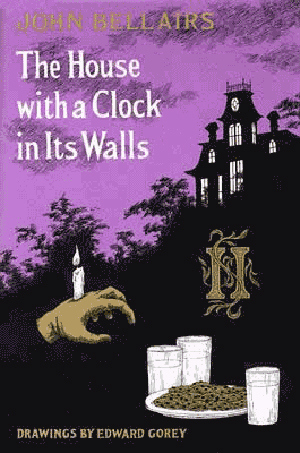
The House with a Clock in its Walls - cover

Orphaned Lewis Barnavelt comes to live with his Uncle Jonathan and quickly learns that both his uncle and his next-door neighbor are witches on a quest to discover the terrifying clock ticking within the walls of Jonathan’s house. Can the three of them save the world from certain destruction?

Bellaaaairs! Such a landmark of my childhood spookyscape. When I was in elementary school, I was already obsessed with spooky shit, even though I was also too weak of constitution to not end up with nightmares for a month after reading something particularly choice. Poe at 9 years old was one high-water mark; Bellairs at 10 or 11 was another. (Isn’t even just the name Bellairs perfect? So rich and old-world; it sounds like old libraries with bell-pulls.)

Bellairs’ preoccupation with the occult was, I think, several layers more complex and esoteric than the more traditional ghost stories I typically found in the library, and correspondingly struck me as something much wickeder, with potentially apocalyptic consequences. Even though M. R. James is considered Bellairs’ most immediate stylistic influence, in my head he’s more immediately the YA answer to Lovecraft (who is also a James descendant, of course). I hadn’t ever encountered something like his red doomsday skies, resurrected corpses, and convincingly evil necromancers before. That mixture of human wickedness and imminence of the terrible sublime – very Lovecraftian, it seems to me. Continue reading The House with a Clock in its Walls, by John Bellairs (1973) E

The King of Elfland’s Daughter, by Lord Dunsany (1924) E

Reviewer: Emera
Date read: 4.18.2016
Book from: Personal collection

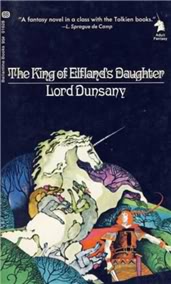
The King of Elfland's Daughter - cover

In their ruddy jackets of leather that reached to their knees the men of Erl appeared before their lord, the stately white-haired man in his long red room. He leaned in his carven chair and heard their spokesman.

And thus their spokesman said.

‘For seven hundred years the chiefs of your race have ruled us well; and their deeds are remembered by the minor minstrels, living on yet in their little tinkling songs. And yet the generations stream away, and there is no new thing.’

‘What would you?’ said the lord.

‘We would be ruled by a magic lord,’ they said.

The King of Elfland’s Daughter is a dreamy, colorful, exceedingly British literary fairy-story for adults; it’s a crucial antecedent to the Lord of the Rings, Lovecraft, and other early purveyors of rich prose and high fantasy. I’d been meaning to read this ever since I started delving into Tolkieniana in high school, and saw it discussed in one of Tom Shippey’s essay collections, and finally invested in a personal copy when Seek Books liquidated a few years ago (alaaaas).

Previously, I’d only read one other bit of Dunsany – one of his short stories, likewise in a Shippey anthology that I picked out in high school. I remember the story as being pleasantly swampy, and involving big swords, at least one lizard-monster, and monolithic architecture. Great; carry on.

Elfland unfortunately I found a slog to get through, which is one of those things that makes one feel jaded. About once a chapter there’d be a human insight or a wondrous image that made me smile; the rest of the time, I found it terrifically cloying, and poorly paced and motivated. It seems to stagger back and forth in the territory between overexplained high fantasy and mystifying fairy story, such that it’s neither quite weird enough to fly free of expectations of logic, nor quite grounded enough in recognizable motivations to feel like much more than a succession of elaborate tableaux. I’d also argue there’s something rhythmically off about the delivery of the fairy-story elements, where the repetition and flow fail to build the kind of irrefutable dream-logic that pulls good mythos onward, but this could be a secondary symptom of my dislike for Dunsany’s writing on the sentence level.

The allover layer of pastoral treacle is what did me in from the beginning. (e.g., “little tinkling songs” above.) I have a tolerance for British plumminess that easily tips over into an embarrassingly active enjoyment (see: my ability to repeatedly reread Richard Adams’ epic fantasies), but Dunsany overleaps plumminess and stands firmly in the Land of Preciousness. So many buttercups.

Returning to the idea of generic contributions: it was interesting to recognize the eventual moral bent of the narrative – where magic/sense of wonder is a good in and of itself, and its restoration to a land is a triumph – as one that I had previously thought of as typical of later fantasy. (McKillip does this a lot, for example.) That is, I see that story structure as deeply indicative of a genre that is both conscious and defensive of itself of as a genre. It makes sense, then, that Dunsany would stand as a precedent to Tolkien et al. not only in style, but in literary ethos.

Related reading:
“The Golden Key,” by George MacDonald (1867) E

Peer into the authorly den…

…with a charming illustrated overview of classic and contemporary authors’ favorite edibles (and drinkables) while writing. (Whitman: “Oysters + meat. For breakfast!”)

—-

…and with an amusingly obsessive infographic comparing authors’ wake-up times to their literary output and awardedness. I have quibbles with the visualization (these colors are noooot self-explanatory, or easily distinguishable), but the wake-up times alone are entertaining and informative as to character (of course Murakami gets up at 4am).

And visually, I have to assume it all works better as a poster, where you can actually see everything at once. Indeed, the graphic is available as an attractive poster print.

– E

Wolf in White Van, by John Darnielle (2014) E

Reviewer: Emera
Date read: 1.28.2016
Book from: Personal collection

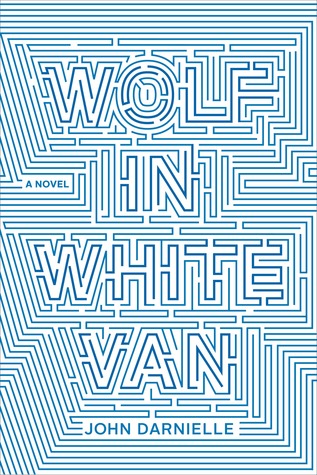
John Darnielle is the Mountain Goats, one of my very most favorite bands, a band-of-my-heart. Wolf in White Van was his first full-length novel, and was nominated for the National Book Award when it came out. (And, great recent news: his next novel is slated for release early next year.)

John Darnielle - Wolf in White Van

This is tragic and beautiful, a dreamy tissue of all of the themes that constitute a sort of home base for Darnielle’s work, the source from which he is always elaborating: family dysfunction in Southern California; teenage alienation, intense to the point of being inarticulable; and its expression in the potent, feral paraphernalia of 70’s-80’s Goth/metal/fantasy – skull emblems, Conan the Barbarian, late-night television programs on Satanic backmasking, bags full of cassette tapes, arcades, dreams of bone thrones and infinite wasteland.

Darnielle’s protagonist begins in a sort of mild rubble. Following a terrible incident as a teenager, he became a shut-in; he now makes his living by running a play-by-mail apocalyptic RPG. He’s just exited the legal trial that investigated his potential culpability for a tragic choice made by two of the players of his game – two of his favorite players. From here, he moves backward and inward to the scene of his own teenage trauma. He paces through a flowing series of vignettes: chance encounters with strangers who break his present-day solitude, almost imperceptibly cruel past conversations with his parents, childhood imaginings, all exuding talismanic significance.

These express simultaneously a piercing sense of humanity, and an inviolable disconnection. He is happy today, in his own way (I’m always drawn to characters who are self-made, faintly holy hermits), but still we step back and back to the black, black place of his trauma. Life is soft and sweet and bitter, and there’s a black vein running through it all.

Mieville & Grossman, glossed; The Making of a Cover

Annotations are fun. Here are some handy collections thereof, featuring…

—–

If you love behind-the-scenes stuff, are weirdly interested in marketing, and/or fixate on cover art decisions for sff novels, check out creative director Lauren Panepinto’s wonderfully in-depth series (13 posts!) on the making of covers for a recent epic fantasy novel trilogy. The series goes all the way from casting of a martial artist as the photographic model, to prop and costume acquisition, to multiple rounds of retouching and graphic design.

So much chewy procedural and decision-making detail in there. It’s also a fun insight into what being creative director for a major sff imprint actually entails – being hyperaware of aesthetic and stylistic trends in current sff media, for example.

Panepinto also shares great advice for commercial sff illustrators over at the Muddy Colors art blog, which is where I first found her Orbit cover series.

Go to:
China Miéville: bio and works reviewed

Comics, summer 2016: Korgi, ApocalyptiGirl

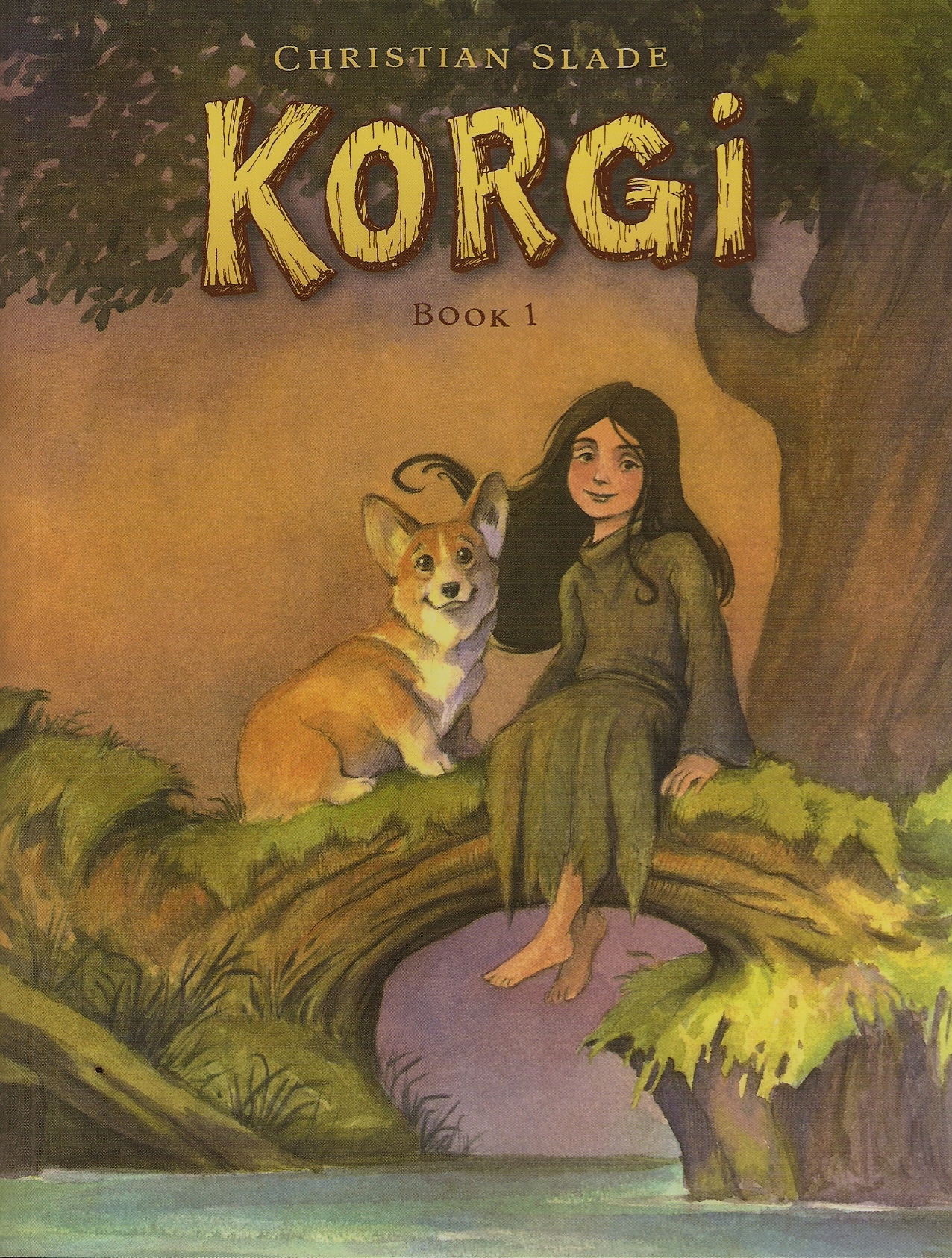
Korgi, by Christian Slade (2007): The woodland escapades and scrapes of a fairy-like young girl and her magical corgi companion – corgis were traditionally said to be fairy steeds. There are three volumes so far; I’ve read the first two.

Korgibook korgi3

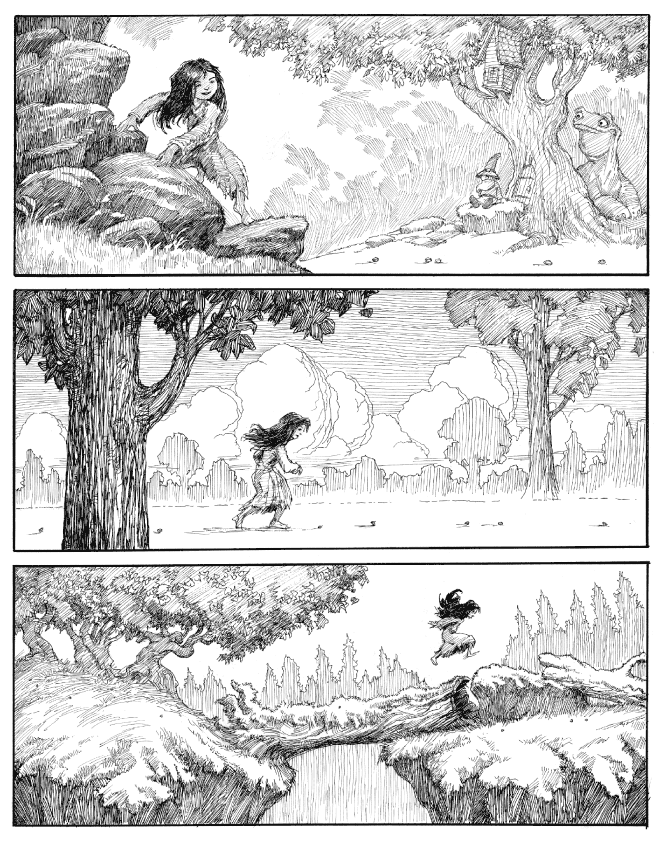
This would be a great gift for folks, children or otherwise, who are keen on fairies and/or dogs. Korgi is so cute and so peaceful – nearly as cute as Mouse Guard, and whimsical, dreamy, and celebratory of motion in a way that’s reminiscent of a lot of the first volume of Flight. Slade is not a very good draftsman (wandering facial features + an overall look that is slightly squishy and uncertain), but every panel is well-composed, again and again hitting that evocative sense of marveling at a woodland expanse. Also, his linework is notably enjoyable – scratchy, nervy, woodsy. His treetrunks are so nice.

Something that Slade does really right is letting loose when drawing the villainous critters – their gleeful bloat and gnarl works well to counterbalance the wide-eyed sweetness of the rest of the comic.

—–

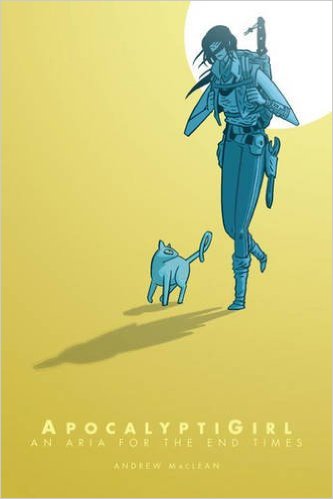
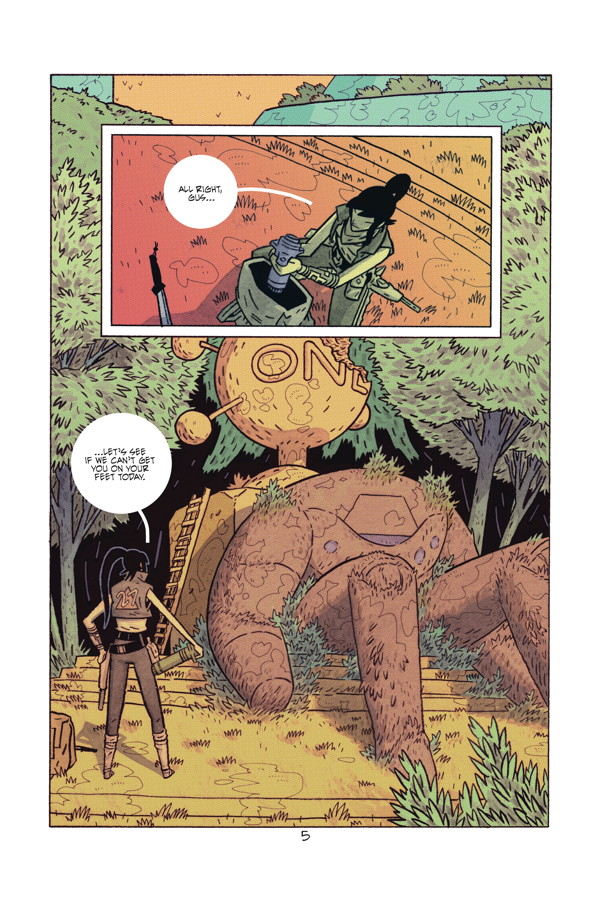
ApocalyptiGirl, by Andrew MacLean (2015): A beautiful, energetic, but morally questionable post-apocalyptic yarn of a young warrior woman and her cat surviving amid tribal warfare.

ApocalyptiGirl

Read it for the crisp action sequences, expressive characters, and scruffy, nubbly, involving environments (rusting, grass-overgrown mechs; a home built in an abandoned subway train). The story’s mysteriousness is dampened by exposition that manages to be both heavy-handed and slightly garbled, and by the pat ending, which seems to lazily undercut all of heroine Aria’s past moral quandaries over the bloodshed she’s seen and enacted.

ApocalyptiGirl

Still, the ambience and visuals are striking and memorable; I’m very happy to own the comic to keep revisiting the art.

Administrivia: new posts every Wednesday, hopefully

As I continue to convert my enormous backlog of drafts into actual posts, I’m going to try sticking to a schedule of one post every Wednesday – so consider checking in then, if you are a manual checker-of-blogs.

Wish me luck keeping the queue filled (especially as the school year arrives again – I’m teaching now), and thank you for sticking around if you have been!

– E

The Harp of Imach Thyssel, by Patricia C. Wrede (1985) E

Reviewer: Emera
Date read: 2.7.2016
Book from: Personal collection

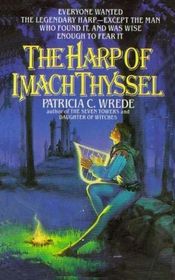
DID YOU KNOW that before Patricia Wrede hit it out the park with the Enchanted Forest Chronicles, she wrote a fair bit of generic epic fantasy? It’s true! Just look at this:

The Harp of Imach Thyssel

I found a copy at a used bookstore, and could not pass it up. Those glowing tights exerted an uncanny magnetism.

The Harp of Imach Thyssel is the third in a series of five books set in Lyra, all of which appear to have been recently revised and republished in the omnibus Shadows over Lyra (1997). Here’s the plot of Harp:

“Everyone wanted the legendary harp – except the man who found it, and was wise enough to fear its power.”

Execution was as you might expect based on the cover art. Since it’s Patricia Wrede, the dialogue can be witty, the writing is brisk, and some of the characters’ relationships are mildly intriguing, but otherwise, everything, everything about this book feels almost disturbingly superficial. None of the characters have motivations or desires more specific than “I fear/desire the Harp!” + “I love, in an incredibly nonspecific way, my family and hate my enemies.” There’s little to no sense of either political or mythological reality, even after the barrage of historical exposition in the last 20 pages or so. This is epic-fantasy MadLibs and a triumph of telling-not-showing.

I enjoyed this as a historical curiosity, and derived a bit of scandalous thrill from seeing an author who’s now exclusively acclaimed for mischievous but squeaky-clean YA, write something that involves death and sex (or at least overtly expressed sexual attraction). In the abstract, it’s fun to consider checking out the revised version of this, but given the time… I’d rather reread the Enchanted Forest Chronicles instead.

Go to:
Sorcery and Cecelia, by Patricia C. Wrede and Caroline Stevermer (1988)
The Grand Tour, by Patricia C. Wrede and Caroline Stevermer (2004)
Dealing with Dragons, by Patricia C. Wrede (1990)
Talking to Dragons, by Patricia C. Wrede (1985)
Thirteenth Child, by Patricia C. Wrede (1985)