Litography

A fun gift idea for typography nerds, book nerds, or both: Litography sculpts the entire text of a classic book or drama into a single, soothingly graphical image. Check out their catalogue for posters of The Origin of Species, The Last Unicorn, Just So Stories… Below are two designs that I particularly enjoyed – 20,000 Leagues Under the Sea and Dracula:

– E

A peopled silence

I’m trying to remember how Walter de la Mare’s 1912 poem “The Listeners” ended up in my to-read pile, and I suspect it was by way of Robert Aickman, whose cagey, elliptical, and exceedingly unsettling tales of the supernatural I’m just beginning to plumb. I haven’t read enough of either yet to make any interesting judgments about de la Mare’s influence on Aickman, so for now, here’s “The Listeners.” The poem conjures a creeping, velvety sense of estrangement, and of the sort of pressure that the unseen can begin to exert on the imagination at night, and in solitude.


The Listeners

‘Is there anybody there?’ said the Traveller,
Knocking on the moonlit door;
And his horse in the silence champ’d the grasses
Of the forest’s ferny floor:
And a bird flew up out of the turret,
Above the Traveller’s head:
And he smote upon the door again a second time;
‘Is there anybody there?’ he said.
But no one descended to the Traveller;
No head from the leaf-fringed sill
Lean’d over and look’d into his grey eyes,
Where he stood perplex’d and still.
But only a host of phantom listeners
That dwelt in the lone house then
Stood listening in the quiet of the moonlight
To that voice from the world of men:
Stood thronging the faint moonbeams on the dark stair,
That goes down to the empty hall,
Hearkening in an air stirr’d and shaken
By the lonely Traveller’s call.
And he felt in his heart their strangeness,
Their stillness answering his cry,
While his horse moved, cropping the dark turf,
‘Neath the starr’d and leafy sky;
For he suddenly smote on the door, even
Louder, and lifted his head:–
‘Tell them I came, and no one answer’d,
That I kept my word,’ he said.
Never the least stir made the listeners,
Though every word he spake
Fell echoing through the shadowiness of the still house
From the one man left awake:
Ay, they heard his foot upon the stirrup,
And the sound of iron on stone,
And how the silence surged softly backward,
When the plunging hoofs were gone.

Tim Pratt x 2

Reviewer: Emera
Date read: 5.10.2013

Digging through my enormous backlog of short story links –

“Troublesolving,” by Tim Pratt (2009): Read the story at Subterranean Online. 

and

“Little Gods,” by Tim Pratt (2002): Read the story at Strange Horizons.

Tim Pratt writes very likable prose; the protagonists in both of these stories narrate with easy, musing movement of thought. “Troublesolving” is a light thriller about a divorcé who encounters a mysterious woman who promises to “fix broken things” for him, just as his recent spate of troubles, from lapsed insurance to a thoroughly vandalized apartment, begins to go really batty. The story doesn’t give the impression of straining itself to be either amusing or startling, and so succeeds at both very well. Its amiably glum protagonist moves through a few science-fictional twists that are fun in an expected kind of way – it’s the incidental observations about ergonomic chairs and pink handguns that really sell the humor, the characters, and their puzzling circumstances.

The Nebula-nominated “Little Gods,” a meditation on grief, ran twee for my tastes, but Pratt’s quietness of tone moderates the sugar to a certain extent, and there are a number of nicely concretely imagined moments:

“I hurl the chunk of rock at the woman on the ceiling. It hits her in the stomach and bounces off, landing on the coffee table with a crack. She squawks like a blackbird. Her skirts draw in quickly like windowshades snapping shut, and then she’s gone, nothing on my ceiling but abandoned spiderwebs.”

Go to:

Tim Pratt: bio and works reviewed

Ghostly pickings from Tor

Reviewer: Emera
Dates read: Various, Spring 2013

I don’t know about anyone else, but I always seem to crave ghost stories before bedtime. Here are some of the results of typing “ghost” into Tor’s rather friendly search engine.

—–

“A Ghost Story,” by Mark Twain (1888): Read the story online at Tor.com.

“I took a large room, far up Broadway, in a huge old building whose upper stories had been wholly unoccupied for years until I came. The place had long been given up to dust and cobwebs, to solitude and silence. I seemed groping among the tombs and invading the privacy of the dead, that first night I climbed up to my quarters. For the first time in my life a superstitious dread came over me; and as I turned a dark angle of the stairway and an invisible cobweb swung its hazy woof in my face and clung there, I shuddered as one who had encountered a phantom.”

This takes a turn for the really goofy, predictably, given the author. An eerie nighttime haunting becomes a clamorous one becomes a slapstick-ridden, tragicomical one, as the initially stricken narrator helps his ghostly visitor realize that he’s the victim of several layers of misunderstanding and hoaxery. Alas!

For those who, like me, have ever dreamed with fond shivers of the eeriness of museums at night, one of the incidental images in this story is worthy of a story of its own, as the ghost is a tenant in a museum –

“I can have no rest, no peace, till they have given that poor body burial again. Now what was the most natural thing for me to do, to make men satisfy this wish? Terrify them into it! haunt the place where the body lay! So I haunted the museum night after night. I even got other spirits to help me. […] I felt that if I ever got a hearing I must succeed, for I had the most efficient company that perdition could furnish. Night after night we have shivered around through these mildewed halls, dragging chains, groaning, whispering, tramping up and down stairs…”

Glee! Any recommendations for haunted museum stories??

—–

“The Cairn in Slater Woods,” by Gina Rosati (2012): Read the story online at Tor.com.

“My recently deceased great-aunt Z’s house smells like cat crap, stale smoke, and retribution.”

“The Cairn in Slater Woods” is a basically old-fashioned teen ghost story, albeit updated with references to manga and smartphone apps. Its narrative predictability and black-and-white morality don’t undermine the fun of its scene-setting – the Slater family woods shadowed by an ancient burial cairn, and tree branches hung with dozens of empty glass bottles. But the best line in the story might simply be the opening one, with its sullen teenaged melodrama. This would have made a very nice episode of Are You Afraid of the Dark.

Go to:
Gina Rosati: bio and works reviewed

R.I.P., E. L. Konigsburg, 1930-2013

“Claudia knew that she could never pull off the old-fashioned kind of running away. That is, running away in the heat of anger with a knapsack on her back. She didn’t like discomfort; even picnics were untidy and inconvenient: all those insects and the sun melting the icing on the cupcakes. Therefore, she decided that her leaving home would not be just running from somewhere but would be running to somewhere. To a large place, a comfortable place, an indoor place, and preferably a beautiful place. And that’s why she decided upon the Metropolitan Museum of Art in New York City.”

E. L. Konigsburg, beloved and multiply Newbery-winning author of the wry, quiet, and brainy children’s classics From the Mixed-Up Files of Mrs. Basil E. FrankweilerThe View from Saturday; Jennifer, Hecate, Macbeth, William McKinley, and Me, Elizabeth; and many others, passed away at 83 on this past Sunday, April 21.

I can’t count how many times I’ve read From the Mixed-Up Files…, thrilled to the furtive elegance of Claudia and Jamie’s runaway plot, and dreamed about harvesting coins from the Met’s fountains and sleeping in its brocaded beds alongside them. There’s so much to love about Konigsburg’s portraits of watchful, thoughtful, growing kids. With concise wit, she captures their probing intelligence; their capacity for nurturing odd thoughts in secrecy; their pride; and, both humorously and sympathetically, their disaffection. Her affection towards them isn’t so much the fond downward gaze of an adult, but the admiring, good-humored glance of one comrade at another. Thank you, E. L. Konigsburg.

Also, from her obituaries I’ve learned that she was a woman in the sciences (chemistry, specifically) long before it was widely accepted. I feel proud to be following her, and women like her. I would have loved to be able to talk with her about science and writing.

Obituaries:

And see Wikipedia for a full list of her works.


– E

“Rappacini’s Daughter,” by Nathaniel Hawthorne (1844) E

Reviewer: Emera
Date read: 4.9.2013
Read it online here – and don’t forget the preface!

I can’t call myself a Hawthorne fan – I would compare the charm that his prose has for me to that of a room full of massive and hideously overcarved ancestral furniture. I can’t help but succumb to the effect of somber impressiveness at times, and the proceedings are occasionally enlivened by a sly wit snaking through (e.g. the self-reviewing preface to “Rappacini’s Daughter,” linked above – aubépine is French for hawthorn) – but I still remember rolling my eyes through the entirety of The House of the Seven Gables. But in smaller doses? I saw a not-too-battered Dover Thrift edition of selected Hawthorne short stories – with a scratchily rendered cover image of very New Englandy headstone ornaments, which I loved – at Lorem Ipsum last weekend, and couldn’t resist adding it to my pile of Gothic stuff.

The romantic melodrama of “Rappacini’s Daughter” is great fun. I think I’d watched the 1980 made-for-TV adaptation before (which appears to have become visually confused in my head with the 2004 film adaptation of the Merchant of Venice? forbidden daughters and Renaissance Italy and all that), but never actually read the story. I still had to haul myself over some of the more pompous prose, but the air of darkly glowing, morbid eroticism and the portrait of perverse desire – with its distorted echoes of Dante and Beatrice, and Romeo and Juliet – are a fair trade for enduring the stiff, orotund moral tone. (Hawthorne points a condemning finger at the corruptibility of the intellect and the imagination, whereas nature he roots in Godly love.)

And Hawthorne creates fantastically sensual effects in the elegant, grotesque confusion of woman and flower:

“Night was already closing in; oppressive exhalations seemed to proceed from the plants and steal upward past the open window; and Giovanni, closing the lattice, went to his couch and dreamed of a rich flower and beautiful girl. Flower and maiden were different, and yet the same, and fraught with some strange peril in either shape.”

“Nor did he fail again to observe, or imagine, an analogy between the beautiful girl and the gorgeous shrub that hung its gemlike flowers over the fountain, — a resemblance which Beatrice seemed to have indulged a fantastic humor in heightening, both by the arrangement of her dress and the selection of its hues.

Approaching the shrub, she threw open her arms, as with a passionate ardor, and drew its branches into an intimate embrace — so intimate that her features were hidden in its leafy bosom and her glistening ringlets all intermingled with the flowers.”

Additionally – I can’t seem to stop referring to Poppy Brite and Storm Constantine lately – I could swear that one of the two wrote an retelling of this, or at least a short story inspired by, but a title properly suggestive of poisonous beauties isn’t jumping out at me from either of their bibliographies. Hmm.

Go to:
Nathaniel Hawthorne: bio and works reviewed

Lovecraft the terrible, the ridiculous, the great

Reviewer: Emera
Date read: 11.18.2012
Book from: Library. Lovecraft’s works are also available online in various archives, such as hplovecraft.com.

Last Halloween I realized I hadn’t really read any Lovecraft since high school, and set out to rectify that by picking up a couple collections from the library.

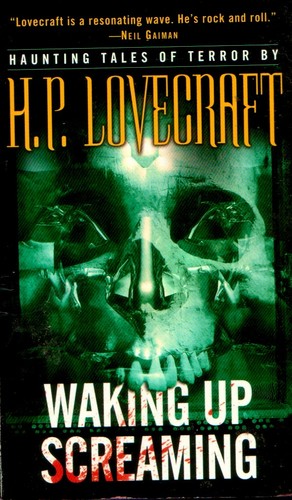
This one had a cover that I would class as “moderately metal” –
book wakingup


– and contained the following stories: Cool Air, The Hound, The Lurking Fear, The Terrible Old Man, The Unnamable, Beyond the Wall of Sleep, The Shadow Over Innsmouth, The White Ship, The Outsider, Herbert West – Reanimator, Arthur Jermyn, The Moon-Bog, The Temple, Dagon, From Beyond, and The Case of Charles Dexter Ward.

Assorted thoughts on some of those:

  • “The Hound” – Lovecraft scholar S. T. Joshi suggests that Lovecraft deliberately, (self-)parodically overheated the language in this Gothickest of Gothic tales, wherein two Decadents struck by “devastating ennui” stray from Baudelaire and Huysmans, and into the accursed pages of the Necronomicon. Unsurprisingly, it’s long been one of my favorites. It’s so ripely morbid and hysteria-stricken. I also have a fondness for doggish ghouls, and the one summoned in this story is pretty kingly.

(Poppy Z. Brite/Billy Martin, who provided a brief foreword for this collection, turned up the decadence of “The Hound” another couple of notches in his amply homoerotic Louisana Gothic retelling “His Mouth Will Taste of Wormwood,” which I remember reading with fierce delight in high school.)

  • “The Lurking Fear” boasted by far the best and most B-movie-worthy back-of-cover blurb for this collection – “An upstate New York clan degenerates into thunder-crazed mole like creatures with a taste for human flesh[!!!!!!!!!!!!]” – as well as, I think, the highest concentration of of delightfully absurd Lovecraftiness. Behold:

“With what manner of far-reaching tentacles did it prey?”

“Then, as I playfully shook him and turned him around, I felt the strangling tendrils of a cancerous horror whose roots reached into illimitable pasts and fathomless abysms of the night that broods beyond time.”

“But that fright was so mixed with wonder and alluring grotesqueness, that it was almost a pleasant sensation. Sometimes, in the throes of a nightmare when unseen powers whirl one over the roofs of strange dead cities toward the grinning chasm of Nis, it is a relief and even a delight to shriek wildly and throw oneself voluntarily along with the hideous vortex of dream-doom into whatever bottomless gulf may yawn.”

Abysms!!! Dream-doom!!!!!! That Thing about the Gryphons, too, hails from these parts.

  • “The Terrible Old Man” is a fable about the triumph of xenophobia. Hooray! It’s funny that Lovecraft attributes the same kind of thuggish, bestial degeneracy to non-WASP immigrants as he does to the ancient-monster-interbred New Englanders in “The Shadow Over Innsmouth,” and to miscegenators in general (see also “Arthur Jermyn”). One imagines his ideal man as a skinny white fellow valiantly sandwiched between the forces of ancient evil and the rising, filthy tide of new immigrants. The taste of his neuroses – the smell of sheer fearfulness – is frequently almost overwhelming.
  • “The Unnamable” is striking in that Lovecraft seems to be having a conversation with some of his literary detractors in it, yet turns it into an earnest philosophical assertion rather than simply a cheeky comeback, as I’d initially assumed it might be. (Though there is an element of wishfully vengeful thinking to it, too, in the tradition of Poe.)

The narrator is an obvious stand-in for Lovecraft himself, and debates with a friend who “object[ed] to my preoccupation with the mystical and the unexplained; for although believing in the supernatural much more fully than I, he would not admit that it is sufficiently commonplace for literary treatment. … With him all things and feelings had fixed dimensions, properties, causes, and effects; and although he vaguely knew that the mind sometimes holds visions and sensations of far less geometrical, classifiable, and workable nature, he believed himself justified in drawing an arbitrary line and ruling out of court all that cannot be experienced and understood by the average citizen. Besides, he was almost sure that nothing can be really ‘unnamable’. It didn’t sound sensible to him.”

Of course, matters pan out such that the skeptical friend, too, is forced into a sense of cosmic and epistemological abjection. A lot of my thinking about life, the universe, and everything Unnamable has, in fact, been flavored by Lovecraftian cosmicism in the past few years – mostly instigated by Caitlín Kiernan‘s science fiction – so I was inclined to offer plauditory fingersnaps at the end of it.

Go to:
H. P. Lovecraft: bio and works reviewed

Flight of the Dragon Kyn, by Susan Fletcher (1993) E

Reviewer: Emera
Date read: 3.25.2011 (reread)
Book from: Personal collection

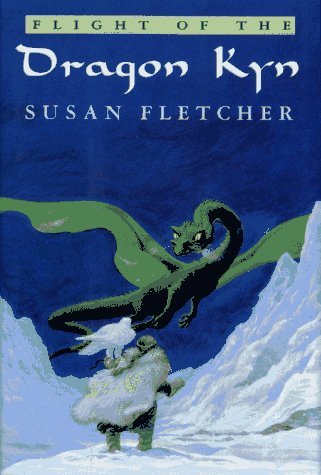
book dragonkyn

Flight of the Dragon Kyn is the second in Susan Fletcher’s Dragon Chronicles, and a prequel to the rest of the series. (At the time that I found the books, they were a trilogy; a fourth that I’ve yet to read came out in 2010.) The series was one of my childhood favorites, combining as it did a number of my best-beloved themes and elements: an Arctic setting; a young female protagonist negotiating loyalties divided between the human and the inhuman world; and what amounts to an ecological crisis, rendered here in fantastical terms. All heady ingredients for a wannabe biologist/budding fantasy nerd. (Also falling under that rubric: Julie of the Wolves and The Woman Who Loved Reindeer.)

Kara, a young woman treated with fear and suspicion for her ability to communicate with birds, experiences a sudden reversal in fortunes when summoned by the king, who gives her rich gifts and takes a clear interest in her talent. Eventually he reveals – to Kara’s horror – that he wishes for her to use her power to call down dragons, so that he might earn recognition as a dragon-slayer. As readers of the preceding novel, Dragon’s Milk, will know, Kara gained her power when she was nursed by a dragon as an infant; the king’s demand forces her to choose between facing his punishment, and betraying her foster kin.

Re-reading the novel, what struck me the most strongly this time were not the movements of the plot, which are fairly standard, though well-told, as is Kara’s gradual evolution from a sullen, fearful loner to a young woman of resolve. (Though when it came to the plot, I could still barely face the scene in which [highlight for spoiler] the dragon who nursed Kara is slaughtered.) What stood out was the grace and lucidity of Fletcher’s prose, and the captivating immediacy with which she paints the the Nordic setting, both natural…

“It was one of those clear, frosty days when the wind snaps your cloak and fleets of clouds scud like warships across the sky. The sun lay low about the mountains, piercing the air with shafts of liquid light that glittered on the fjord and haloed the rime-shaggy firs. […] A whitchild called from a hawthorn tree; I called back. It swooped down and landed on my wrist, eyeing me unabashed, its fierce little claws pricking my skin. I called down a gull, too, which landed on my elbow, and a crake, and a sleepy stony owl that tucked one foot up and tried to take a nap on my arm. ‘Wake up,’ I said, twisting my arm so they all lost their balance and clutched me and wildly flapped their wings.

I laughed and stroked them one by one.”

…and human:

“I hesitated. My eyes, accustomed to the brightness out of doors, gradually made out the shape of the hall. Narrow, horn-covered windows striped the walls, shedding a dim, honeyed glow across a shifting tide of warriors and an undertow of dogs. A darkish smoke-haze lingered high in the network of beams and rafters, where perched a flock of doves.

One by one the warriors broke off talking and turned to look at me. Silence grew until it seemed to fill the hall, until the doves’ placid burbling sounded loud.”

Falconry was/is also one of my pet subjects; the novel weaves in absorbing scenes of Kara working with birds under the tutelage of a taciturn and irascible (of course) falconer, including her own gyrfalcon, Skava. And on the fantastical side of things, Fletcher invents some wonderful details of dragon biology – like the fact that infant dragons, being so full of combustible gases, float in their sleep, until grounded again upon breathing out little gouts of flame. And all of the scenes – often fraught with awe-ful tension – of Kara moving among the wild dragons are vivid and convincing.

All told, it made me happy to my roots, to step back into the world of an old, old favorite and find so many of its details as fresh and fascinating as I remembered them to be.  I’m thinking now of also revisiting Fletcher’s Shadow Spinner (1999), a retelling of the Thousand and One Nights’ frame story from the perspective of a young girl who helps Shahrazad to find new stories.

Go to:
Susan Fletcher: bio and works reviewed

“The Story of the Bad Egg,” by Emily Ryan

Reviewer: Emera
Date read: Summer 2012, and again this week
Read the comic online here.

The Story of the Bad Egg: cover image

“Once upon there lived a prince in a palace.

This morning the prince was in the twelve-acre pool. He had just received a call saying that the flood in Hampshire was not as serious at it had first seemed and had in fact done wonders for agriculture. The royal visit to share in the local suffering was thus cancelled and the prince had a blank in his calendar …”

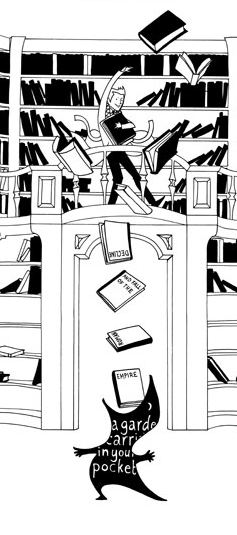
… and that blank ends up being filled by an ill-tempered dragon, who in turn yields up four eventually voracious dragon children. The Story of the Bad Egg,” a 34-page comic by Swedish illustrator Emily Ryan, is very droll and a touch morbid. Its finely inked art is a fun mix of airy, geometric, and quietly kinetic (I like all the curves made in space when the characters go into motion), set off by visual gags and verbal irony polished to a gleam. And the “bad” egg, who is accidentally allowed to sate her appetite with books and promptly transforms into a stubby, walking representation of written knowledge, is one of the most lovable characters I’ve run into in a long while. (Watch out for the scene where she asks her foster father to chalk her pool cue for her.)

comic badegg

Go to:
Read “The Story of the Bad Egg” online