alternate history

You are currently browsing articles tagged alternate history.

Date read: 8.1.11
Book from: Personal collection
Reviewer: Emera

This is one of my most treasured finds from Readercon, picked up from the fantastic Somewhere in Time Books: Tanith Lee’s 1988 limited-edition novella, with illustrations by Tom Canty. From the title and pastel cover I expected a tale of genteel swashbuckling, possibly YA; should have remembered that Lee never goes in for gentility. Elegance, yes – Lee is manically elegant – but never gentility.

Madame Two Swords starts in a familiar place for Lee: a sensitive, fearful, recently orphaned young woman in an early 20th-century alternate France is treated cruelly by both circumstances and humanity; her only spiritual sustainment comes from a book of poetry discovered in a secondhand shop:

“The blue cloth binding was quite pristine under its dust. It was a slender book, without lettering. I opened it out of curiosity.”

“The book was my talisman. Other girls wore crosses or medallions.”

The narrator is unemployed and evicted, and finds herself in dire straits, chased from one end of the socioeconomic spectrum to the other: too middle-class for hard labor, too unskilled to be a seamstress, too unwilling to accede to customers’ advances to be a waitress in the seedier cafés. At the extremity of her despair – enter Madame Two Swords, a black-eyed old woman of terrifying intensity, in whose museum-like house the narrator comes to some strange realizations.

In this France, the Revolution was sparked by the poet-demagogue Lucien de Ceppays in the city of Troies. This Revolution culminated in the execution of the original revolutionaries, including de Ceppays, by the fickle mob, and the occupation of France by a fearful British monarchy. Inhabitants now speak “Frenish” as often as French, and labor in a depressed economy overseen by a puppet government. The narrator’s talisman-book is, of course, a volume of de Ceppays’ work, and contains besides a haunting watercolor portrait of him. The story quickly sees her devotion to his image and memory moving beyond girlish fantasy.

The final supernatural twist, when it comes, is powerful in effect, in large part because of the supreme delicacy with which Lee constructs the fleeting image central to the revelation. There’s an also-delicate but definite touch of gender-bending, which I wish I could discuss in more detail without being spoilery, but suffice it to say that I liked how Lee addressed its implications, a lot. This is a story that makes use of deeply Gothic-Romantic tropes (duh, Tanith Lee) yet resists being just romantic; it’s fierce and intelligent and ultimately insists on the dignity of all of its characters.

And so my love affair with Tanith Lee continues! If you like Revolutionary France and cross-lingual puns and intelligent Gothic fantasy, if you love Tanith Lee and beautiful books, you might consider treating yourself to a copy of Madame Two Swords

Two more photos (can’t help showing it off!) under the cut:
Read the rest of this entry »

Tags: , , , , , , ,

Date read: 7.26.10
Book from: Borrowed from a cousin
Reviewer: Emera

Incomplete read – one of those books that you start to get a bad feeling about as soon as you notice the back-cover blurbs are all by third-rate authors and obscure newspapers. The Arcanum is a supernatural thriller that attempts to gather together Sir Arthur Conan Doyle, Harry Houdini, renowned voodoo practitioner Marie Laveau (who died 38 years before the book is set, but oh well), and H. P. Lovecraft on the trail of some mystery involving the Cthulhu mythos. Blah blah blah, all been done before.

I skimmed about three chapters, and it reads like mediocre fanfiction or The Da Vinci Code, full of dun dun DUN chapter breaks and phrases like “carnal treasures” and “In a swirl of a black topcoat he was gone.” It does make a lot of sense if you consider that Wheeler is primarily a screenwriter, not a novelist.

Go to:
Thomas Wheeler

Tags: , , , ,

Date read: 8?.09
Read from: Clarkesworld #20
Reviewer: Emera

I had previously mentioned “A Buyer’s Guide to Maps of Antarctica” as being one of my favorite short stories read in 2009, yet had never gotten around to posting a review.

I don’t want to spoil a single bit of it, so I’ll just say that it’s like Jonathan Strange and Mr. Norrell except with Antarctican cartography (yes, duh – seriously, I refuse to reveal any of it, please just go read it if you’ve got the chance), and that it’s funny, delightfully imagined, and ravishingly beautiful. I rather wish it had won the 2009 World Fantasy Award that it was nominated for, but clearly that’s not up to me. So instead I’ll just flail about it here.

Go to:
Catherynne M. Valente
“Urchins, While Swimming,” by Catherynne M. Valente (2006) [E]

Tags: , ,

Date read: 10.04.09
Read from: Infinity Plus
Reviewer: Emera

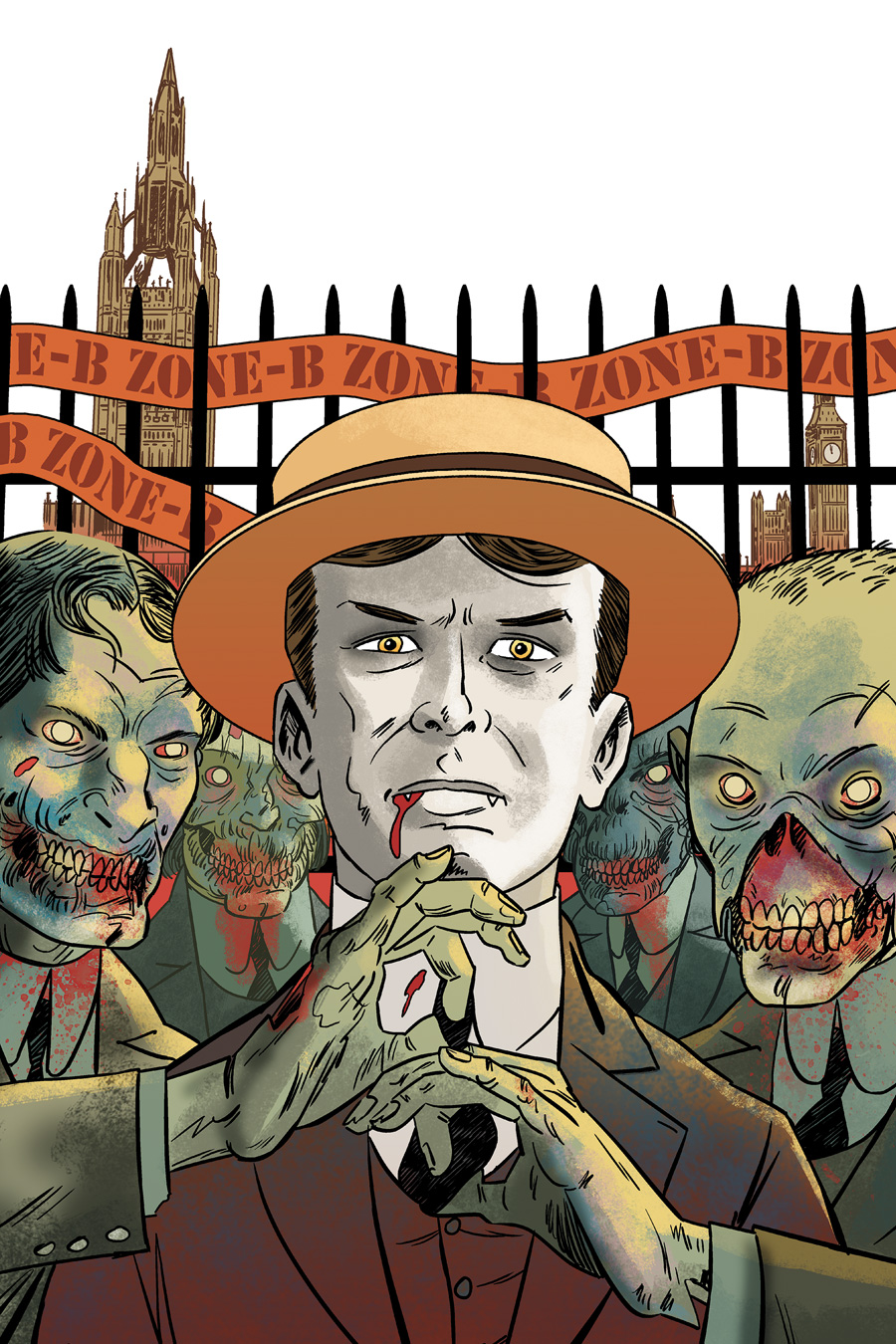
Will I ever tire of vampires? It seems unlikely, at this rate. Kim Newman’s novella “Coppola’s Dracula” was my first foray into his post-vampire-epidemic alternate history. Here he reenvisions Francis Ford Coppola’s Apocalypse Now, Dracula-style.

Protagonist Kate Reed is an Irish vampire – a contemporary of Bram Stoker, in fact - who’s been brought on the set of Coppola’s bloated, luckless production as a consultant, and bears witness to disaster after near-disaster as filming staggers onward. Interspersed with her coolly amused observations are excerpts of key scenes from the script, all paralleling Apocalypse Now (and Dracula, of course) and sharply rendered in Newman’s clipped, punchy, darkly humorous style.

I would probably have appreciated the central conceit more had I been more of a film buff, but I still found the parallels clever and entertaining, and Newman is deeply meticulous in imagining his alternate universe. However, the novella left me rather cold beyond that – though Kate is well-developed as a character, she’s so dispassionate that the story lacks emotional effect, other than conveying a lingeringly tragic kind of Cold-War disaffection. Well, that’s probably deliberate, so count that as another stylistic success for the story.

Go to:
Kim Newman

Tags: , , , ,

Date read: 12.30.07
Read from: Personal collection
Reviewer: Emera

In The Historian, the titular scholar reminisces about the quest that she, her father, and her father’s mentor pursued several decades ago. All three became determined to discover the origins, deeds, and whereabouts of the true Dracula, the now-immortal Romanian warlord Vlad Tepes.

It should probably be evident to anyone following this blog for a certain length of time that I have a huge vampire problem, which very often leads me to read things that, well, aren’t really worth the time. This includes The Historian. I discovered only after the fact of attempting to read it that it has been sarcastically and very appropriately dubbed “The Dracula Code.” (Although to Kostova’s credit [?], she began writing it 10 years before Dan Brown began work on his ticket to fame.) The formula is indeed the same: flimsy historical detective work pursued among various scenic European locations, wedded to page after page of cheap cliffhangers achieved by conveniently dicing the narrative into chunks digestible enough for the attention-span-impaired.

Likewise, the “startling” or “creative” revelations she makes about the Dracula myth are only startling or creative if you don’t know all of them already, which I inevitably did. However, I do have to assume that people who pursue more useful hobbies than endlessly reading vampire mythology might still find the book an amusingly presented tour through various bits of folklore and theory. Overall, though, Kostova’s writing is pretty limp and insubstantial, if not quite on the level of a Dan Brown novel. I ended up ploughing through a total of 70ish pages out of a sense of obligation (having unfortunately purchased the novel), glanced at the ~600 left, and said “screw it.” Add Kostova to the list of presumably smart people (she’s a Yale graduate) who can’t actually write novels.

Go to:
Elizabeth Kostova

Tags: , ,