young adult

You are currently browsing articles tagged young adult.

Date read: 7.17.10
Book from: Personal collection
Reviewer: Emera

What is Un Lun Dun? It is London through the looking glass, an urban Wonderland of strange delights where all the lost and broken things of London end up… and some of its people, too – including Brokkenbroll, boss of the broken umbrellas; Obaday Fing, a tailor whose head is an enormous pin-cushion; and an empty milk carton called Curdle. Un Lun Dun is a place where words are alive, a jungle lurks behind the door of an ordinary house, carnivorous giraffes stalk the streets, and a dark cloud dreams of burning the world. It is a city awaiting its hero, whose coming was prophesied long ago, set down for all time in the pages of a talking book.

When twelve-year-old Zanna and her friend Deeba find a secret entrance leading out of London and into this strange city, it seems that the ancient prophecy is coming true at last. But then things begin to go shockingly wrong.

Un Lun Dun is basically Neil Gaiman’s Neverwhere meets The Phantom Tollbooth, and owes debts – some playfully acknowledged in the text itself – to many other classics of children’s and fantasy literature, including A Wrinkle in Time and, of course, Alice’s Adventures in Wonderland. It’s a cleverly crafted and delightful book: Miéville lets loose yet again with his famously phantasmagorical imagination, filling out his alternate London with topsy-turvy architecture (houses constructed of obsolete technology, a ghost town whose buildings constantly flicker through various historical incarnations, a web-cocooned “Webminster Abbey”), a lovingly detailed bestiary, and a vast arsenal of puns (some of my favorites: UnLondon’s sister cities include Parisn’t and Lost Angeles).  All of these are complemented by Miéville’s appropriately inky, energetic illustrations. For fans of his adult fiction, there are also plenty of touches of eerie, deeply unsettling dark fantasy, some of which could have come straight out the New Crobuzon books – I couldn’t help feeling that the Black Windows of Webminster Abbey might be lesser cousins of Bas-Lag’s Weavers. With his usual anti-authoritarianism, Miéville also takes a good amount of pleasure in dismantling and inverting the tropes of the fantasy quest, so that we get a very unintended heroine who quite literally refuses to go by the rules of the (talking) book.

For all its delights, though, Un Lun Dun somehow failed to really surprise and engage me. It felt a bit like a themepark ride: there’s plenty to see, but it all goes by rather quickly, and you’re not sure how much it really meant to you at the end of it all. The characters are all likable enough, including the quick-thinking, occasionally snarky heroine, but few are really memorable enough to be lovable, and I had about the same feeling about the book as a whole. Its pleasures lie more in its ingenuity and dazzling wordplay than in any real emotional connection. I also had a little difficulty with the writing style, which is heavy on short, bluntly declarative sentences. And though I appreciated the plot’s pro-environmental, pro-literacy bent, the messages were shoehorned in a little awkwardly and obviously.

So, like Kakaner, I’m going to have to make a conditional recommendation for this one: try it out if you’re a big Miéville fan, are looking for pure entertainment, or have a younger reader of strong constitution to share it with. I would have loved this so much more had I read it when I was about twelve – too much younger and I think certain scenes might have kept me from sleeping at night, though I would have read them with relish anyway.

Go to:
China Miéville
Un Lun Dun, by China Miéville (2007) K

Tags: , , , ,

Date Read: 6.10.09 (fourth[?] reread)
Book From: Personal collection
Reviewer: Emera

Caribou is a dreamer of dreams, a solitary figure isolated from her tribe ever since the death of her father. One day her sister-in-law comes to her, bearing a strange golden child whom she begs Cari to conceal and raise. At first unwilling, Cari is nevertheless struck by the child’s beauty and takes him in, naming him Reindeer – for as she reluctantly comes to realize, he is a trangl, one who can take the form of both human and stag. Though she longs to keep him by her side, his blood will always call him to run with the wild deer that course the land. As the years pass, stirring spirits and strange upheavals in the mountains and hot springs send the tribespeople to Cari’s door for advice. From Reindeer, she learns that the world is being remade, and that if she is to save her people, she and Reindeer must guide them over the Burning Plains to the safety of the lands that lie beyond the Pole, where only the wild deer have run before.

Of all the authors I’ve read, I’ve most deeply identified with the work of Meredith Ann Pierce, for the longest period of time. I first read her books when I was eight or nine, and though there were many literary loves before then, and have been many, many more since, I always think of Pierce’s books – particularly her Darkangel Trilogy – as The Milestones. She’s most often written tales about strange, wise girls who become strange, wise women, fall in love with transfigured or supernatural lovers, and have adventures in worlds of beautifully realized mythology. Mythology, because her books often read to me like myths from alien planets: her images and language have a timeless, jewel-like purity to them, coupled with deliciously archaic diction and – this might be the part that most gets me – a deep, deep sense of yearning that encompasses both human and immortal desires.

This was the first time I’ve re-read one of her books in about eight years, and since a lot has changed in that time, this doesn’t have quite as immediate an emotional impact on me as it used to. I used to get a lot of vicarious rage and anguish on Cari’s behalf. The older me is both slightly more phlegmatic (though really not that much less romantic), and slightly savvier: this time around, I was a little squicked at Cari having a relationship with her foster child, despite Pierce’s care in emphasizing his inhuman nature and unfamilial relationship with Cari.

Regardless, I was still deeply affected by the wondrous and joyful imagery: gambling trollwives, rivers of silver caribou running, a sledge with belled harness and golden runners, firelords with lava-seamed palms… And while the younger me fumed (again on Cari’s behalf) when she read the inconclusive ending, the older me was pleasantly surprised to recognize its maturity and realism. This will continue to be a story, and a world, that I treasure, and that I suspect will still surprise me every time I re-enter it.

Meredith Ann Pierce’s works will very likely appeal to fans of Patricia McKillip and Robin McKinley; I’ve never entirely understood why she hasn’t become more well-known and widely read. Not that I’m biased or anything.

Go to:
Meredith Ann Pierce

Tags: , ,

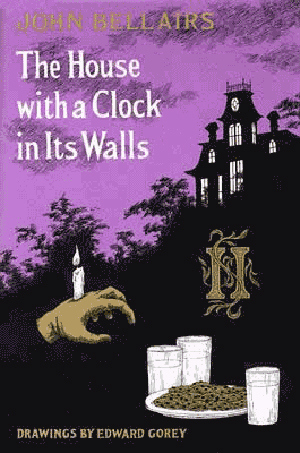
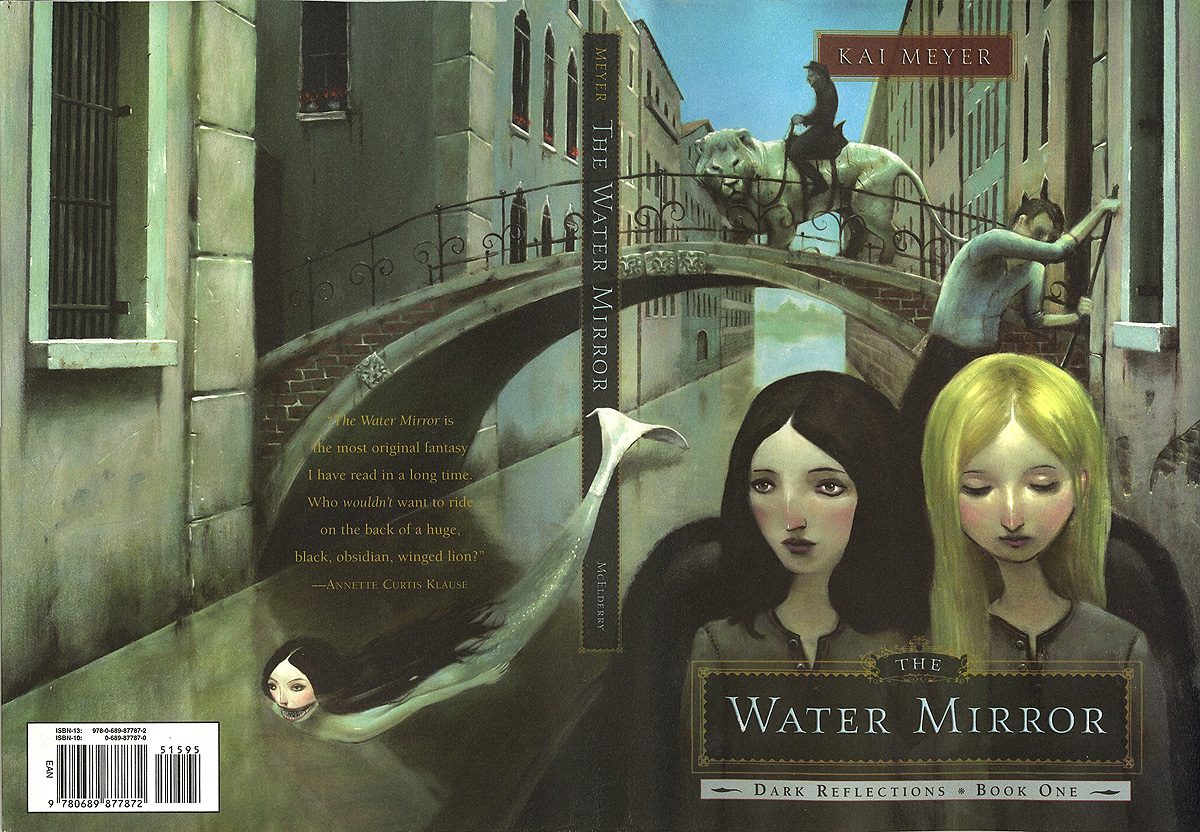
One of my roommates and I work part-time for a children’s library, and one of the activities this past fall was teaching kids how to interpret stained-glass windows – so in between midterm cramming, we ended up painting eight huge faux-stained-glass windows of popular children’s (and a couple YA) books for the kids to guess. Anyone else like to have a go?

1.

cotsenstainedglass-006

2.

cotsenstainedglass-009

Read the rest of this entry »

Tags: , ,

I was thinking a few days ago about the constraints that young adult fiction places on how adults are written, so I was excited to see this New York Times essay

The Parent Problem in Young Adult Lit

which charts the progression of child-parent relationships in YA: from the original “triumphant orphan,” to the increasingly frequent combination of a child in travail with a “mopey, inept” parent hovering somewhere in the background.

Some of my random thoughts about it (which really don’t amount to much more than a wannabe TV Tropes article):

YA almost always requires that parents be inaccessible and/or ineffectual, either by circumstance (e.g. kidnapped/dead/in another world – the latter is partly why “portal fantasies” like Oz and Narnia are so convenient) or by nature (e.g. flighty bohemian or deadbeat suburbanite). If there are authority figures who do, in fact, have any actual authority, they’re eventually removed (Gandalf/Dumbledore), or themselves embody at times the terrifying, uncontrollable, and unknown (Uncle Merriman in the Dark is Rising series, or Gandalf again – oh those wizardly mentor-types).

Parents who are trustworthy and (try to be, at least) present are simply unaware of the extent to which the protagonists are getting themselves in trouble. Or, as the NYT essay points out, it might be a couple decades earlier than now, in which case less parental supervision would have been the norm. This is true of, say,  Zilpha Keatley Snyder’s The Egypt Game, in which the characters who have parents have quite likable ones – they just happen to let their kids spend a heck of a lot of time alone in city streets and abandoned lots. Here, the parents are also used as a secure base for the child protagonists to recover from their first round of adventures and stage their next, after a sufficient interval of being cleaned up and comforted. That kind of recourse to domestic stability happens pretty infrequently in contemporary YA, it seems to me. Even in TEG, it’s written as only a temporary touchdown in Home and the familiar, a brief intersection of the increasingly distant orbits of child and parent.

Are all YA novels, on some level, about how children and young adults relate to authority? I suspect so. The same goes for all coming-of-age narratives, really. I’m actually sitting in on a class about children’s literature this semester, and now I wish were actually taking it, so I could have an excuse to write a paper about relationships with authority in YA. We’re talking about A Wrinkle in Time next week, and I suspect it’ll get worked in there somewhere, since Meg’s realization of her father’s fallibility is such a critical (and traumatic) plot movement.

Other books with a particularly explicit emphasis on children + parents/authority – Coraline, Ender’s Game, the His Dark Materials trilogy (b’durr)… Any other major suspects that I’m missing? I am also really, really tempted now to go back to the Narnia books and look at what’s going on there, since obviously they’re written to encourage a much different relationship with authority.

P.S. BBCF is taking a break this week. The weather is too nice (at least where I am) for snark!

Tags:

Date read: 1.26.10
Book from: Borrowed from Kakaner
Reviewer: Emera

Jeanne DuPrau - The City of Ember

“The city of Ember was made for us long ago by the Builders. It is the only light in the dark world. Beyond Ember, the darkness goes on forever in all directions.”

At the age of twelve, every child in Ember is assigned a job. Curious, bright-spirited Lina Mayfleet longs to be a messenger, but is instead assigned to dreary, dirty work in the underground Pipeworks. Doon Harrow, her classmate, is convinced that the sporadic blackouts of the great lamps of Ember – the only lights in a world of immeasurable darkness – forebode worse troubles for the city. He longs to investigate the enormous generator in the Pipeworks that provides the city with all of its power, so when he receives the job of messenger, he and Lina eagerly swap their assignments. As the blackouts increase in frequency and fear spreads among Ember’s citizens, Lina soon comes to share Doon’s suspicions that Ember is a dying city. Together the two embark on a search to uncover Ember’s origins, and to find a way to lead their people to the bright city that Lina is sure exists somewhere in the Unknown Regions beyond Ember.

I didn’t enjoy The City of Ember nearly as much as I thought I would, for all that it’s a rather endearing book. The characters and setting are warmly evoked, with detailed and frequently beautiful descriptions, and of course the concept is fantastic to begin with – Ember is one of those fictional realms you wish you could visit, and more often than not end up carrying around with you in your head after reading. (I imagined it looking like a less anarchic version of the city in the film La Cité des Enfants Perdus/The City of Lost Children, and would pay a large amount of imaginary money to run along its streets and peer into its shops.)

Read the rest of this entry »

Tags: , , ,

Date read: 3.22.06
Book from: Borrowed from Kakaner
Reviewer: Emera

book-kindl-woman

Rendered nearly invisible by her painful shyness, Anna is the middle girl of three sisters living with their mother in a rambling Victorian home. At seven years old, terrified by the impending threat of school, she retreats into passageways and secret rooms of her own construction, and lives within the walls of her home for the next seven and a half years. Anna is content to hide away as a sort of household ghost, nearly forgotten by even her family, until her own growth as a woman renders her “invisibility” no longer possible. A stray love note pushed through the walls of her refuge appeals to her developing emotions, and the time approaches for Anna to once more venture into the outside world.

I randomly spotted The Woman in the Wall on Kakaner’s bookshelf at some point around when we first began exchanging reading material on a regular basis, and the premise deeply appealed to me since I’m a. sorta shy and b. obsessed with secret nooks and passageways, to the point that a home-within-a-home sounds right up my alley. Even outside of my particular quirks, the concept is an emotionally powerful and imaginatively appealing one.

Unfortunately, Kindl’s writing isn’t up to the task. Although the book aims for a wistful, playful mix of Gothic fairy tale and magical realism, it increasingly dissolves into a weepy, unconvincing pastiche, with the narration lurching between “artsy,” “quirky” whimsy and banal adolescent histrionics. Too much pretension (or, more charitably, ambition), not enough substance. Though Anna’s story could have been a moving modern fairy tale about escapism and self-isolation, The Woman in the Wall more often seems clumsy, superficial, and implausible.

Go to:
Patrice Kindl

Tags: , , ,

Date read: 2.18.09
Book from: Personal collection
Reviewer: Emera

Ursula Vernon - Nurk
Nurk, a timid but sensible shrew, one day receives an urgent letter addressed to his famous grandmother Surka, the warrior, pirate queen, and general adventurer. Unfortunately, no one has seen Surka for seasons, and so Nurk packs Surka’s diary and some clean socks into his trusty snailboat, and heads off in search of adventure for the first time in his life. Dragonfly royalty in distress, perilous climes, and strange beasts aplenty await him.

I’ve been a huge fan of Ursula Vernon for years now, both of her vibrant, wildly imaginative artwork – she created the cover and interior illustrations for Nurk, of course – and of her equally weird and hilarious life and writing, as seen in her blog.

Nurk is her first mainstream published book, and is par for the Vernon course, combining a practical, likable hero (à la the protagonist of her long-running webcomic Digger, in which grandmother Surka is a character) with earthy wit, tooth-shattering cuteness, quick pacing, and occasional jolts of very enjoyable, very deeply creepy imagery – unripe salmon growing on trees; silent, voracious, cow-sized caterpillars… Individually, these elements are highly entertaining and imaginative, but the plot itself is rather unmemorable, relying as it does on predictable twists and a there-and-back-again structure.

Nevertheless, it’s a very winning little book, and I wish I knew some young persons of an age to be suitably gifted with it. Well, in a couple of years some of my cousins will be thereabouts, and the meantime, it’s a quick, fun adventure for readers of any age.

Go to:
Ursula Vernon

Tags: , , , , ,

Katherine Paterson has been appointed the Library of Congress’s National Ambassador for Young People’s Literature:

“New Envoy’s Old Advice for Children: Read More” (via the New York Times)

Hooray! And a lovely, Matilda-ish quotation from Paterson:

As the daughter of missionary parents in China, she read her way through her parents’ library of children’s classics by A. A. Milne, Beatrix Potter, Robert Louis Stevenson, Rudyard Kipling, Kenneth Grahame and Frances Hodgson Burnett. “That is where the friends were,” she said, evoking her lonely childhood.

Also, raise your hand if you cried when you read The Bridge to Terabithia. (On a side note, I’ve heard that the 2007 movie was actually quite good – it was simply very poorly marketed, as its trailers appeared to have confused both fans and those unfamiliar with it.) I also cried A Lot when I read The Great Gilly Hopkins and Jacob Have I Loved, and I’m pretty sure also during Of Nightingales that Weep.

- E

Tags: ,

Date Read: 3.31.07
Book From: Personal Collection
Reviewer: Kakaner

Summary

Deeba and Zanna begin to experience strange phenomena until suddenly, one day, they find themselves in the alternate universe of Unlondon. Here they find that Unlondon has been waiting for a long time for Zanna, the “Shwazzy,” to fight the evil Smog, an evil cloud of pollution. However, things are not what they seem when events contradict the prophecies and Deeba is forced to fight the Smog on her own.

Review

I MISS BEING 12.

I have a feeling that if I read this while in middle school, I would have deemed Un Lun Dun The Best Book Evar. The book is incredibly reminiscent of Phantom Tollbooth, chock full of strange realizations of imagination, each a quirky interpretation of something we find in our reality. There’s not much to say plot-wise… the bulk of content was simply the adventure and development of Unlondon and numerous characters, a delightful afternoon romp for the appreciative reader.

As I organized my thoughts for this review, I remembered the China Miéville event I attended at which I saw him speak about Un Lun Dun and the entire YA genre with vivid boyish excitement, and the memory is coloring my opinions of Un Lun Dun with much fondness. I crushed hard on the fact that so much of the humor and wit in Un Lun Dun was derived from references and puns concerning books. Some pun examples, though not necessarily book-related, are the Black Window, Unbrellas, and Bookaneers! But most of the circumstantial humor was centered around books, and made me suspect that Un Lun Dun was really a huge elaborate scheme to write a book to promote the message: “BOOKS ARE TEH SH*T!” and it made me extremely happy.

Unfortunately, I actually don’t consider Un Lun Dun a must-read. But if you’re a die hard Miéville fan, definitely check it out. The main character is very likeable, and it is an insanely easy read with maximum 4-page chapters. To top it all off, you get to see Miéville’s very own original illustrations. There’s nothing better (or sometimes worse) than observing an author treading new ground, and Mieville does so quite expertly. There is indeed a deep understanding of the YA psyche and which elements excite the imagination.

Go to:
China Miéville
Un Lun Dun, by China Miéville (2007) E

Tags: , , , , ,

Date Read: 6.14.09
Book From: Personal Collection
Reviewer: Kakaner

Summary

Well. Sam is a normal teenager obsessed with skateboarding and sports crushes here and there. He gets his girlfriend pregnant, and suddenly, he has a world of responsibility and decisions to face.

Review

Overall it was meh. Straight off I’m going to say I don’t think Hornby should be a YA writer. I felt like it was very clear he was an adult fiction author writing a YA novel. It didn’t feel effortless and simple like I think YA books should feel– it was almost as if he wrote the book as an adult novel, then went through and edited down each sentence, but in the end, you could still feel the weight of words meant for an older genre underlying the novel. That is not to say the writing is bad (*quite* the contrary), but it wasn’t quite natural.

I think the main thing I want to talk about is Tony Hawk. So Sam is well…. obsessed with skateboarding and Tony Hawk. And guess what? Tony Hawk is Sam’s imaginary friend! During about half the book, Sam talks to the Tony Hawk in his head, asking him life questions and advice for decisions, and “Tony Hawk” responds. Sam formulates these responses for himself based on what he knows of Tony Hawk from his autobiography. And I have to say, it is a rather cheesy concept and very apparently something that screamed “I AM A CHARACTERISTIC YA PLOT ELEMENT! I PROVIDE A ROLE MODEL AND SOURCE OF COMFORT FOR THE MAIN CHARACTER.” And of course, there’s the obligatory “run away from home because you feel overwhelmed and need to find yourself” chapter.

I think all my gripes stem from the fact that Sam is simply an uninteresting main character. He has no quirks, he’s a typical American teenage skater, and I am simply not sympathetic to his plight. He is boring as boring gets. And maybe that is supposed to be the appeal of Sam, that he’s Sam Everyboy, but there is definitely a way to pull that off and Hornby did not do it.

I guess I just wasn’t swept up by many elements which I’m sure others found mature and insightful– the premise of teenage pregnancy and the admittedly realistic ending. Even though I ripped it apart, it’s still a decent book, solidly constructed, though not memorable.

Go To:

Nick Hornby

Tags: ,

« Older entries