“Advection,” by Genevieve Valentine (2009) E

Date read: 8.14.09
Read from: Clarkesworld Magazine
Reviewer: Emera

Genevieve Valentine’s “Advection” is a wistful, elegiac, soft science fiction story, set amid the elite children of an Earth that has lost its oceans and rain. Though light on character development, it’s full of runs of understated lyricism, and beautifully sustains a mood of distant yearning. I felt thoughtful and pleasantly melancholy after reading it, and one of its central images hasn’t left my mind since.

Go to:
Genevieve Valentine
Clarkesworld Magazine

Un Lun Dun, by China Miéville (2007) K

Date Read: 3.31.07
Book From: Personal Collection
Reviewer: Kakaner

Summary

Deeba and Zanna begin to experience strange phenomena until suddenly, one day, they find themselves in the alternate universe of Unlondon. Here they find that Unlondon has been waiting for a long time for Zanna, the “Shwazzy,” to fight the evil Smog, an evil cloud of pollution. However, things are not what they seem when events contradict the prophecies and Deeba is forced to fight the Smog on her own.

Review

I MISS BEING 12.

I have a feeling that if I read this while in middle school, I would have deemed Un Lun Dun The Best Book Evar. The book is incredibly reminiscent of Phantom Tollbooth, chock full of strange realizations of imagination, each a quirky interpretation of something we find in our reality. There’s not much to say plot-wise… the bulk of content was simply the adventure and development of Unlondon and numerous characters, a delightful afternoon romp for the appreciative reader.

As I organized my thoughts for this review, I remembered the China Miéville event I attended at which I saw him speak about Un Lun Dun and the entire YA genre with vivid boyish excitement, and the memory is coloring my opinions of Un Lun Dun with much fondness. I crushed hard on the fact that so much of the humor and wit in Un Lun Dun was derived from references and puns concerning books. Some pun examples, though not necessarily book-related, are the Black Window, Unbrellas, and Bookaneers! But most of the circumstantial humor was centered around books, and made me suspect that Un Lun Dun was really a huge elaborate scheme to write a book to promote the message: “BOOKS ARE TEH SH*T!” and it made me extremely happy.

Unfortunately, I actually don’t consider Un Lun Dun a must-read. But if you’re a die hard Miéville fan, definitely check it out. The main character is very likeable, and it is an insanely easy read with maximum 4-page chapters. To top it all off, you get to see Miéville‘s very own original illustrations. There’s nothing better (or sometimes worse) than observing an author treading new ground, and Mieville does so quite expertly. There is indeed a deep understanding of the YA psyche and which elements excite the imagination.

Go to:
China Miéville
Un Lun Dun, by China Miéville (2007) E

The Faery Reel, ed. Ellen Datlow & Terri Windling (2004) E

Date read: 3.23.08
Read from: Public library
Reviewer: Emera

The Faery Reel is a collection of “tales from the twilight realm” by 25 notable authors of fantasy, including Neil Gaiman, Charles de Lint, Holly Black, Tanith Lee, Gregory Maguire, and Patricia McKillip.

I picked this out not actually expecting to be all that impressed, since Datlow/Windling collections aren’t always uniformly strong, despite their typically high-powered author selection. But here, at least, my expectations were far surpassed; this is a remarkably beautiful, moving, and varied collection. I found only two or three stories less than strongly written, and they still had concepts that were fun or clever or fresh – which is saying a lot when you’re going for a topic as well-worn as fairy stories. (As a note, authors in the collection keep to the spelling convention of faerie = race, Faery = place, so I’ll follow that convention below.)

Continue reading The Faery Reel, ed. Ellen Datlow & Terri Windling (2004) E

The Curious Case of Benjamin Button, by F. Scott Fitzgerald (1921) K

Date Read: 12.27.08
Book From: Personal Collection
Reviewer: Kakaner

Summary

A look at the life of Benjamin Button who was born old and died young.

Review

I have never been a fan of F. Scott Fitzgerald, my only experience having been The Great Gatsby. I feel horrible saying that I didn’t enjoy it in the least bit, although it certainly stands to argue that if I revisited it now with a slightly more mature eye, I would probably quite like it. Being the incredibly anal purist I am, after learning about the upcoming release of The Curious Case of Benjamin Button in theaters, I headed over to my local BN to read the short story first. I wasn’t blown away by the story, but it was so quaint, indirectly emotional, and beautiful that I ended up spending $13 on the somewhat overpriced newest edition with full-color illustrations.

100_3340

Continue reading The Curious Case of Benjamin Button, by F. Scott Fitzgerald (1921) K

Galápagos, by Kurt Vonnegut (1985) E

Date read: 4.29.08
Read from: Personal collection
Reviewer: Emera

As the world economy crashes and the majority of the human race begins to plunge to its end, half a dozen oblivious individuals  make their way aboard a luxury cruise liner. The ship will indeed reach its ultimate destination – the Galápagos Islands – but rather than enjoying the “Nature Cruise of the Century,” its passengers will instead become the progenitors of a new humanity.

I felt a little foolish reading Galápagos since it’s heavily interwoven with references to other works in Vonnegut’s canon, in particular referencing Slaughterhouse-5 stylistically, when the only other Vonnegut novel I’ve read to date is Cat’s Cradle. Nonetheless, I thoroughly enjoyed the novel, which, in typical Vonnegut style, is a loopy, frightening, and brilliant satire that manages to be utterly compelling sci-fi without necessarily hewing all that closely to little things like scientific reality.

The narrative is executed with almost dizzying meta-playfulness (the meta aspect actually being explained by events later in the book), jumping from character to character while variously concealing, foreshadowing, and fragmenting the events of the plot. And though I sometimes find it hard to actually care about the characters in satires, I found the brittle, desperate cast of Galápagos strangely lovable. Much of this is thanks to Vonnegut’s tone, which is sad, funny, bitter, and loving in a way that makes you suspect he half-regrets loving anyone in the first place, but he can’t help himself, either.

Both novels of Vonnegut’s that I’ve read have a unique perspective on the absurdity of human life – both times, I’ve gotten a sense of actions that are simultaneously tiny and monumental, meaningless and all-important, cascading across a vastly bleak landscape. Here, Vonnegut asks the question of whether humanity will survive once we’ve done our best (unintentionally or otherwise) to destroy it – and if so, in what shape. And would the planet be losing anything anyway, if humanity as we see it now were to disappear? Vonnegut doesn’t quite say yes or no, which is one of the aspects of Galápagos that most make it worth reading.

Go to:
Kurt Vonnegut

The Historian, by Elizabeth Kostova (2005) E

Date read: 12.30.07
Read from: Personal collection
Reviewer: Emera

In The Historian, the titular scholar reminisces about the quest that she, her father, and her father’s mentor pursued several decades ago. All three became determined to discover the origins, deeds, and whereabouts of the true Dracula, the now-immortal Romanian warlord Vlad Tepes.

It should probably be evident to anyone following this blog for a certain length of time that I have a huge vampire problem, which very often leads me to read things that, well, aren’t really worth the time. This includes The Historian. I discovered only after the fact of attempting to read it that it has been sarcastically and very appropriately dubbed “The Dracula Code.” (Although to Kostova’s credit [?], she began writing it 10 years before Dan Brown began work on his ticket to fame.) The formula is indeed the same: flimsy historical detective work pursued among various scenic European locations, wedded to page after page of cheap cliffhangers achieved by conveniently dicing the narrative into chunks digestible enough for the attention-span-impaired.

Likewise, the “startling” or “creative” revelations she makes about the Dracula myth are only startling or creative if you don’t know all of them already, which I inevitably did. However, I do have to assume that people who pursue more useful hobbies than endlessly reading vampire mythology might still find the book an amusingly presented tour through various bits of folklore and theory. Overall, though, Kostova’s writing is pretty limp and insubstantial, if not quite on the level of a Dan Brown novel. I ended up ploughing through a total of 70ish pages out of a sense of obligation (having unfortunately purchased the novel), glanced at the ~600 left, and said “screw it.” Add Kostova to the list of presumably smart people (she’s a Yale graduate) who can’t actually write novels.

Go to:
Elizabeth Kostova

The Music of Razors, by Cameron Rogers (2007) E

Date read: 10.29.08
Read from: Personal collection
Reviewer: Emera

In 19th-century Boston, a brilliant medical student falls in with a group of young spiritualists, only to see his hopes and plans go terribly awry as a result of their experimentations. A century and a half later, he walks the earth weary and immortal, wielding instruments made from the bones of a murdered angel, and seeking to discharge the task that he took upon himself at the height of his despair. Finally seeing a candidate worthy of becoming his successor, he enters the dreams of a boy named Walter. The young and frightened Walter learns that all he needs to do to banish his bad dreams is tell the monster in his closet to go away – only to learn too late that it was the monster who stood between him and a force banished from the universe at the beginning of time.

If the above summary sounds complicated, it doesn’t even begin to represent the full breadth of the mythology of The Music of Razors. This is a universe big enough for fallen angels, closet monsters, and a clockwork ballerina to coexist over several centuries and in the same 300 pages. The novel’s pace and complexity are undeniably demanding, especially in the beginning chapters, but the reward is that every time the page is turned, you uncover a new secret of this strange mythology, and your mind constantly stretches to keep up with the narrative’s wicked twists and hinted truths. All of these elements are convincingly and for the most part satisfyingly intertwined, and the ending of the novel delivers a volley of heavy emotional punches before leaving the reader with that perfect combination of feeling fulfilled, yet still wanting more.

I do think that the pacing could have used some stretching and breathing space to improve coherence, allow the reader more time with the characters’ emotions, and reduce the ending’s frenzied, overexplosive feel. However, from what I understand of the novel’s publishing history, there were constraints placed on its length. The first, Australian publication, released in 2001, was even shorter. Significantly more material was added to the American release, but from the sounds of it, Rogers would have liked even more.

Rogers’ writing is briskly dark, his brief sentences filled with a subtle, glancing menace, capable of both brutality and a wistful, fairy-tale loveliness. He seems to write with a grim kind of exhilaration, as aware of the emotional and spiritual weight of the story and its characters as he is of the breathtaking leaps of imagination employed in fully animating it.

This is a novel that offers immediate, visceral pleasure and sorrow, as well as food for later thought – in particular, Rogers has fascinating things to say about the role of our fears in shaping our selves. The panoply of fantastical elements also means that there is something here for all tastes, from historical fantasy to horror. All in all, I highly recommend The Music of Razors. Even if flawed, this is one of the most memorable fantasy novels I have read in recent years, and I know that many of its denizens will be staying with me for the rest of my life. Fans of Neil Gaiman and Caitlín R. Kiernan will likely enjoy this book.

Go to:
Cameron Rogers
Cameron Rogers interview with Tabula Rasa
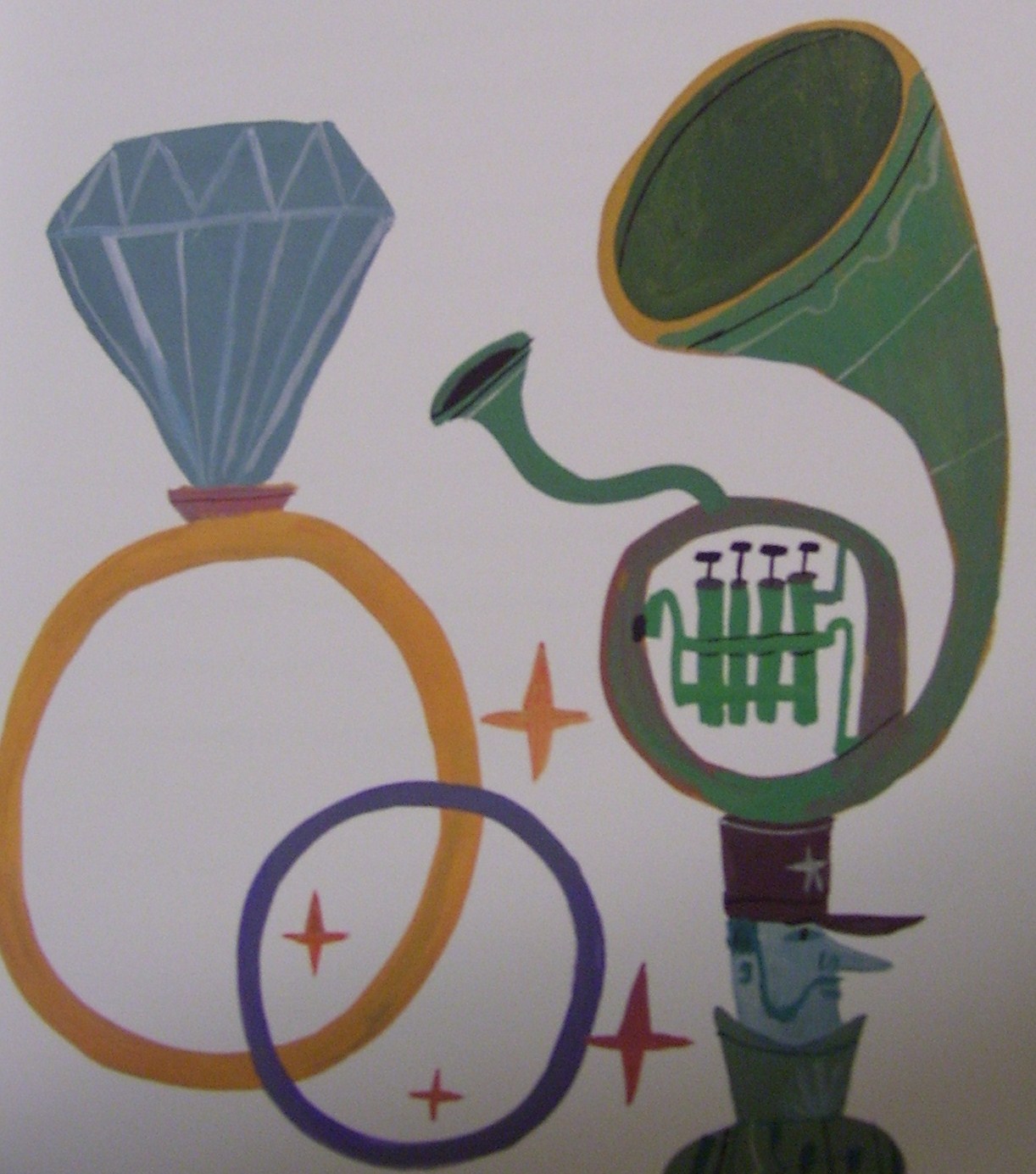
“Where Laughter Came From”

As this is still in copyright, I am figuratively glancing about surreptitiously and wondering if I’m allowed to post this – but I can’t resist.

Where Laughter Came From

Laughter was the shape the darkness took around the first appearance of the light. That was its name then: The Shape The Darkness Took Around The First Appearance Of The Light.
The light still keeps trying to touch its lips. The lips of darkness.
The light’s hand rises but the darkness is not there. Only laughter.

– W. S. Merwin

From his 2007 collection of prose poems, The Book of Fables.

I like it when poems are resistant to easy interpretation in a playful, secretive, mythological way, rather than being abstruse or strenuously allusive. (Although the latter kind are fun in their own way, especially when generously footnoted for the uninitiated.) I’m having a lot of fun putting my brain into origami pleats trying to grasp all of this one at once.

Tuesdays with Morrie, by Mitch Albom (1997)

Date Read: 9.24.09
Book From: Neha
Reviewer: Kakaner

Summary

Morris Schwartz, a professor of sociology at Brandeis, discovers he has ALS and begins his journey to death. Mitch Albom, the author, learns of his professor’s condition and begins to visit him regularly on Tuesdays for his “one last class”. Tuesdays with Morrie chronicles Morrie’s last days through the eyes of Albom and relates Morrie’s philosophies outlooks on life, love, and death.

Review

Morrie’s tale is touching and admirable; his philosophies are noteworthy and brave.Morrie taught the importance of relationships and love above all else in this world, and used his struggle with death to examine how one should approach and embrace the end. The edition I read claims that Tuesdays with Morrie has changed millions of lives and, well, I can certainly believe that many people have been impacted by this book. I feel like Morrie and I would get along because I share the same views as him and can only hope that when I reach his age, I will be able to be an example of my beliefs.

However, I found Tuesdays with Morrie very hard to enjoy. The writing was incredibly spare and simple to a fault, and all in all, incredibly dramatic. The prose (if you could call it that) reads like Dan Brown’s and the italicized entries are reminiscent of Lifetime programming. Morrie’s story is already beautiful and it does not need added dramatism or overstatements. I do not doubt that Albom is a great journalist because I can tell his writing style is great for that field, and especially for sports. It just felt like a cop out because each chapter was so clearly a simple transcription of audio tapes, and edited so as to push the reader’s emotional buttons. I wish Albom had added more literary meat and interpretation. Reading this novel devolved into a plodding journey and my enthusiasm was gradually buried by mediocrity.

I honestly tried really hard to read past the writing and into the content, but everytime I hit yet another cheesy and dramatic chapter-ender I would cringe a little and put the book down. I’m sure picky readers will encounter the same experience, in which case I would definitely not recommend reading Tuesdays with Morrie. But I suspect for the most part, people will enjoy this and people should read this, if not only to increase ALS awareness and for a mature prospective on life.

Go to:

Mitch Albom

Darkly Dreaming Dexter, by Jeff Lindsay (2004) K

Date Read: 11.26.08
Book From: Personal Collection
Reviewer: Kakaner

Summary

Short version: Dexter S1.
Long version: Dexter, a serial killer of serial killers, works in the Miami Metro Police as a blood spatter analyst alongside with his foster sister Deb. We learn that Dexter was taken from a violent crime scene and raised by a cop. Upon learning that Dexter was prone to murderous intentions, his dad taught him the art of killing. Suddenly, a new wave of killings crop up and are accredited to the “Ice Truck Killer” and Dexter recognizes that these killings are somehow a message to himself. Using his skills as a killer and resources at the police department, Dexter helps track down the killer while trying to keep those that matter to him safe.

Review

Unfortunately, I have to say this is exactly what I expected. I watched two seasons of Dexter before picking up one of the novels (much to my shame), partly due to the horrible things I had heard about the books. Unsurprisingly, the writing was entirely mediocre, unsophisticated, and wholly disappointing.

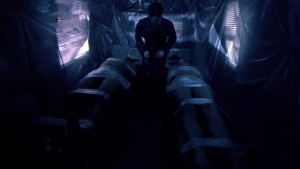
dexter-s1-dexter-killing

Naturally, I couldn’t help but compare Darkly Dreaming Dexter to the TV series. The novel is told from Dexter’s point of view, and really does try hard to achieve the same dark, cynical, wry atmosphere that the TV adaptation manages to accomplish so well… but just falls short. The pacing of the book was alright, as in there was always some action each chapter to propel the story forward. I feel like I’m really at a loss for what else to say about the novel. It was just unremarkable (again, comparison to the TV series). There are some minor plot differences between the novel and show, except for the ending; however, I don’t really care because I’m not reading anymore books.

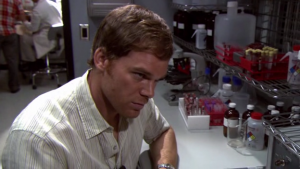
dexter-in-blood-lab

At the least, reading Darkly Dreaming Dexter has made me appreciate the TV adaptation immensely. You really begin to gain an understanding of the skill involved in developing Dexter’s character for the screen, piecing together the soundtrack and film style for that perfect cynical criminal atmosphere, and the screenplay is just impeccable. The TV show has really come a long way from the novel and certainly shaped a masterpiece from raw materials.

Go To:

Jeff Lindsay